§ Journal · May 28, 2026
Best Aftermarket Trimmer Head for Ryobi — Value Picks
Compare OEM vs aftermarket bump-feed heads for Ryobi ONE+ and 40V trimmers. Highlight compatible replacement heads available on our site.
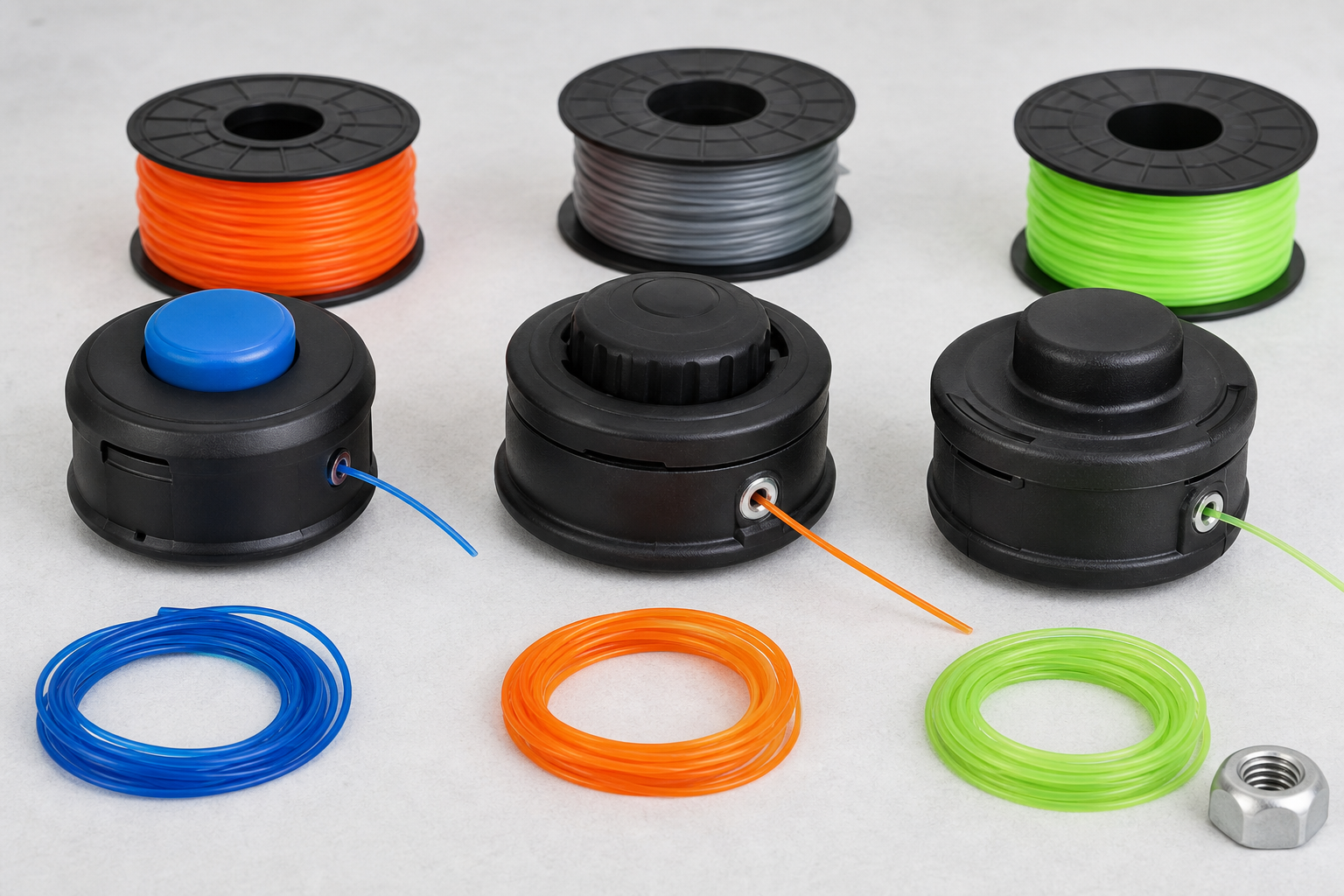
Best Aftermarket Trimmer Head for Ryobi — Value Picks
If your Ryobi string trimmer has started feeding line poorly, vibrating more than usual, or chewing through spools too fast, replacing the trimmer head is often cheaper than replacing the whole tool. For many DIY homeowners, the real question is not whether to replace it, but whether to stick with an OEM Ryobi head or switch to an aftermarket bump-feed head.
The good news is that there are solid aftermarket options for many Ryobi ONE+ 18V and 40V trimmers, especially if you want lower replacement cost, easier restringing, or a tougher bump knob and housing. The catch is fitment: Ryobi has used several head designs across cordless models, including fixed-line heads, prewound spool systems, and bump-feed assemblies. That means the “best” replacement depends on your exact trimmer model, shaft size, and arbor/thread setup.
Below, we compare OEM versus aftermarket trimmer heads for Ryobi cordless units, explain what to look for in a replacement, and highlight compatible options available on our site.
OEM vs aftermarket: what’s the real difference?
Ryobi OEM trimmer heads are designed around exact factory fitment. That usually means easy installation, proper balance, and predictable line feed. If your trimmer came with a Reel-Easy, Reel-Easy+, or similar bump-feed system, the OEM replacement often installs with minimal guesswork. For homeowners who just want a direct swap, OEM is the safe choice.
Aftermarket heads tend to win on value and flexibility. Many universal or Ryobi-compatible bump-feed heads support a wider range of line diameters, use more durable plastics or aluminum-reinforced components, and can cost noticeably less than a factory assembly. In broad pricing terms:
- OEM Ryobi heads: typically in the $20–$40 range depending on model
- Aftermarket direct-fit heads: often $15–$30
- Premium universal bump-feed heads: usually $25–$45
That said, cheaper aftermarket heads are not always better. Very low-cost imports can have loose tolerances, weaker springs, poor cap retention, or incorrect thread adapters. Those issues lead to wobble, uneven feed, and faster wear on the gearbox or drive shaft.
For most homeowners, the value sweet spot is a mid-priced aftermarket direct-fit or high-quality universal bump-feed head with:
- support for .080” or .095” line
- a sturdy bump knob
- clear fitment for Ryobi cordless models
- included adapters if required
If your goal is simply restoring factory behavior, OEM still makes sense. If you want lower long-term spool costs and easier restringing, aftermarket can be the better buy.
Fitment for Ryobi ONE+ and 40V trimmers
This is the most important part of the buying decision. “Ryobi compatible” is not enough by itself.
Ryobi ONE+ 18V and Ryobi 40V trimmers have been sold in multiple versions, and not all use the same head mount. Some use dedicated spool caps and internal spool cartridges; others use more conventional bump-feed heads with threaded attachment points. A head that fits one 40V model may not fit another.
Before buying, verify these points:
- Exact model number from the trimmer data label
- Voltage platform: ONE+ 18V vs 40V
- Head style: fixed line, spool/cassette, or bump-feed
- Arbor/thread direction and size
- Maximum supported line diameter
Many Ryobi homeowner trimmers are optimized for .080” line, while some larger 40V units can run .095” line. Installing a head that is too large or loading too thick a line can overwork the motor, reduce runtime, and create feeding issues.
A few general rules:
- 18V ONE+ trimmers usually benefit from lighter heads and .080” line
- 40V trimmers can often handle heavier-duty bump-feed heads and may support .095” line
- If your original setup used a compact spool cartridge, a universal bump head may require an adapter and enough guard clearance
If your trimmer is primarily used for light edging and grass cleanup around sidewalks, fences, and flower beds, staying close to the original head size is smart. If you regularly cut taller grass or denser weeds, a sturdier aftermarket bump head with slightly heavier line can improve performance, provided your model supports it.
Bump-feed heads vs spool systems
A lot of Ryobi owners replace heads not because the trimmer is worn out, but because they are tired of proprietary spool systems.
A traditional spool-based OEM head is convenient when new. Drop in a prewound spool, close the cap, and go. But over time, replacement spool cost adds up. If you trim frequently through the season, those costs can exceed the price of a better replacement head.
A good aftermarket bump-feed head usually offers three value advantages:
-
Lower ongoing line cost
Instead of buying brand-specific spool cartridges, you buy bulk trimmer line in 1/2-lb or 1-lb packs. -
More line choices
You can use round, twisted, or serrated line, as long as the head and trimmer support the diameter. -
Simpler field reloading
Many modern bump-feed heads are designed for quick winding without fully disassembling the unit.
For homeowners, the practical trade-off is this:
- OEM spool systems are easy and tidy, but line cost is higher
- Aftermarket bump-feed heads take a little setup, but are often cheaper to maintain
The best line sizes for Ryobi cordless trimmers are usually:
- .080” for routine lawn trimming
- .095” for heavier edging and thicker weeds on compatible 40V models
Avoid overloading a lightweight ONE+ trimmer with aggressive square or oversized line unless the manufacturer specifically allows it. You may gain cutting power, but lose battery efficiency and head reliability.
Durability, usability, and what to watch out for
The best aftermarket trimmer head for a Ryobi is not necessarily the toughest one on paper. It is the one that matches your trimmer’s power level and fitment while being easy to live with.
When OEM is better
Choose OEM if:
- you want guaranteed fit
- your trimmer uses a specialized Ryobi head system
- you are happy with the original line feed
- you want the fastest installation with no adapters
When aftermarket is better
Choose aftermarket if:
- your OEM head wears out quickly
- replacement spools are getting expensive
- you want a reloadable bump-feed design
- you need a sturdier cap, spring, or bump knob
Common issues with low-end aftermarket heads
Watch for:
- poor threading or adapter mismatch
- weak cap tabs that pop loose
- oversize heads that reduce battery runtime
- low-quality springs causing erratic line feed
- vague compatibility claims without model references
For most DIY users, a compact to mid-size bump-feed head is ideal. Huge universal heads may look durable, but they can make a cordless trimmer feel nose-heavy and reduce maneuverability around landscaping.
Our picks
Below are the types of replacement heads worth considering from our catalog for Ryobi ONE+ and 40V trimmers. Always match the product listing to your exact model number before ordering.
1. Direct-fit Ryobi-compatible bump-feed replacement head
Best for: homeowners who want an easy swap with OEM-style operation
Typical price tier: $18–$28
Best fitment: selected Ryobi ONE+ and 40V models that already use a bump-feed head
Line support: typically .080”, sometimes up to .095” on larger units
This is the best value option for most buyers. A direct-fit aftermarket head gives you near-OEM installation without the full OEM price. Look for versions that include cap, spool housing, spring, and bump knob as a complete assembly.
2. Universal bump-feed head with adapter kit
Best for: users upgrading from a worn head and wanting bulk-line savings
Typical price tier: $22–$40
Best fitment: Ryobi trimmers with compatible arbor/thread specs and adequate guard clearance
Line support: commonly .080” to .095”
This is often the smartest long-term choice if your Ryobi model can accept it. A quality universal head can be easier to reload and often lasts longer than entry-level factory heads. Be sure the listing includes the correct adapters for your Ryobi shaft.
3. OEM-equivalent spool head assembly
Best for: owners who want factory behavior and minimal guesswork
Typical price tier: $25–$40
Best fitment: exact model-specific Ryobi replacements
Line support: typically whatever your trimmer originally used
If you do not want to think about thread adapters, winding patterns, or line compatibility, this is the safe buy. It may cost more over time, especially if it relies on proprietary spool refills, but fit and balance are usually excellent.
4. Bulk replacement trimmer line for reloadable heads
Best for: anyone moving away from expensive prewound spools
Typical price tier: $8–$20 depending on length and diameter
Best sizes for Ryobi: .080” for most homeowners, .095” for compatible 40V units
If you switch to a reloadable bump-feed head, do not overlook line quality. A decent twisted or round copolymer line feeds better and breaks less often than bargain no-name line.
FAQ
Will any aftermarket trimmer head fit my Ryobi?
No. Fitment depends on your exact model number, mounting style, and arbor/thread specs. Always confirm compatibility before buying.
Is an aftermarket bump-feed head better than OEM?
Sometimes. Aftermarket heads can offer better value, easier reloading, and lower line costs. OEM is usually better for guaranteed fit and factory-style operation.
Can I use .095” line on a Ryobi ONE+ 18V trimmer?
Usually not recommended unless your specific model supports it. Most 18V homeowner models perform best with .080” line.
Are Ryobi 40V trimmers better candidates for aftermarket heads?
Yes, in many cases. They generally have more power and can better handle a heavier bump-feed head, provided the mounting system is compatible.
Should I replace just the spool or the whole head?
If the cap, spring, housing, or bump knob is worn, replace the whole head assembly. If only the line is used up and the head is in good shape, a spool or bulk line refill is enough.
What’s the best value setup for a homeowner?
For most DIY users, the best value is a mid-priced aftermarket direct-fit bump-feed head paired with quality .080” bulk trimmer line. It keeps upfront cost reasonable and lowers long-term maintenance expense.
If you want, I can also turn this into:
- a product-category page version with internal linking callouts, or
- a model-specific version naming compatible Ryobi part numbers and replacement heads from your catalog.
Find the right part on Amazon
Check price, stock and fitment — ships direct from Amazon.
§ Parts


