§ Journal · May 10, 2026
Cordless Trimmer Line: Matching Gauge to Voltage
Why a 20V trimmer and a 56V trimmer want different line — and what goes wrong when you mismatch.
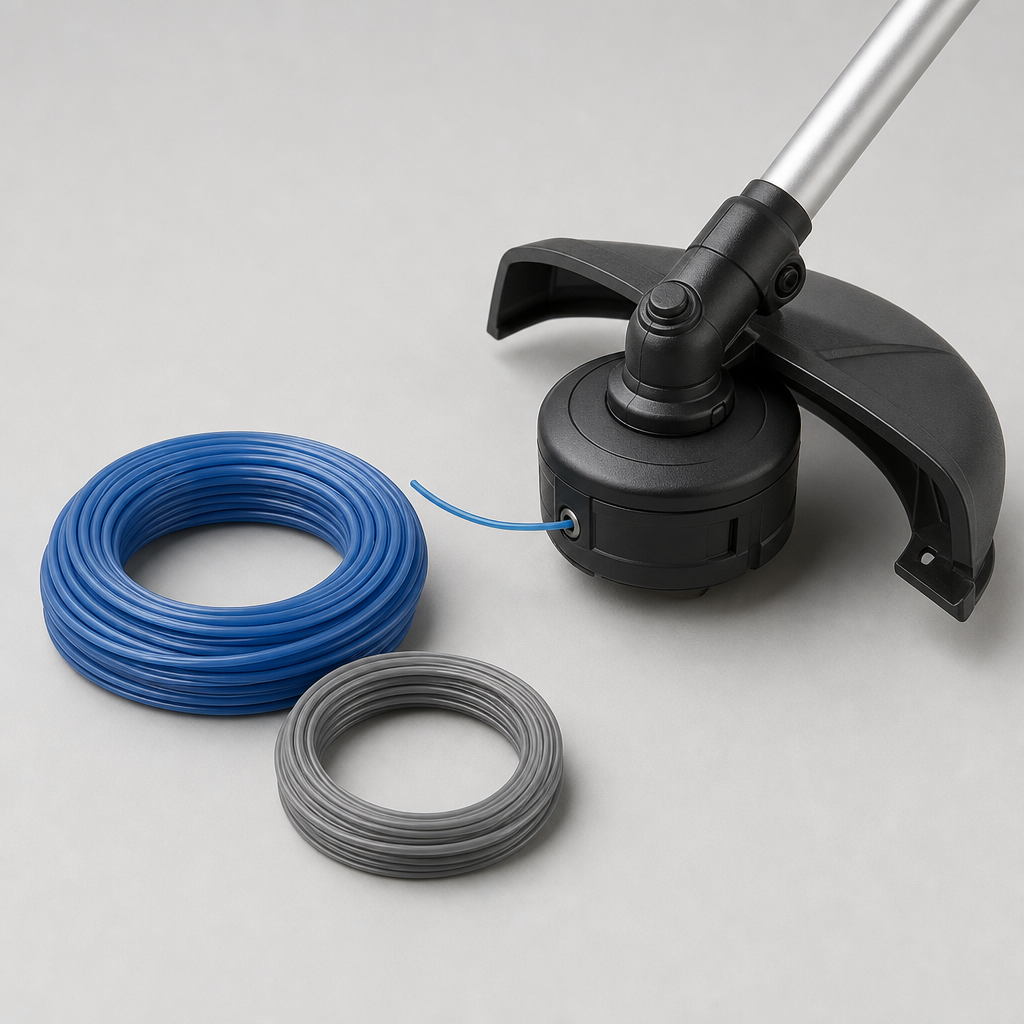
On a gas trimmer you mostly choose line gauge by the job. On a cordless trimmer there’s a second constraint: the battery voltage is a good proxy for how much line the motor can actually swing. Match gauge to voltage and the trimmer cuts well and runs long; mismatch it and you’ll either snap line constantly or kill your runtime. Here’s the mapping.
18V–20V — stick to thin line
These small motors don’t have the torque to spin heavy line. Run 0.065” (0.080” at the most). Over-gauging a 20V trimmer drags the motor, tanks the runtime, and often won’t feed at all.
24V–40V — the 0.080” zone
The sweet spot is 0.080”, stepping up to 0.095” for tougher jobs if the head supports it. Most homeowner work lives here — enough power for thicker grass and light weeds without bogging.
56V–80V and gas — heavy line
These have the torque for 0.095” and up, which is what you want for weeds and light brush. Under-gauging a high-voltage trimmer just wastes its capability — the line snaps and you’re refilling constantly.
Voltage-to-gauge cheat sheet
| Battery | Line gauge |
|---|---|
| 18–20V | 0.065” (0.080” max) |
| 24–40V | 0.080” (0.095” if rated) |
| 56–80V / gas | 0.095”+ |
Mismatch symptoms
- Too heavy for the voltage: motor bogs and overheats, line won’t feed, runtime collapses.
- Too light for the voltage: line snaps constantly and cuts poorly in anything but soft grass.
The order of priority
Match the gauge to your head’s rating first (that’s the hard limit — see Choosing Trimmer Line Gauge), then to your voltage, then to the job. Find spools and line for your exact model on the Brands page or in the shop.
§ Parts


