§ How-To
Trimmer Line Keeps Breaking? Common Causes and Easy Fixes
Community complaints: line snaps every few minutes, breaks on fence/wall edges, wrong gauge line
Published · Last updated:
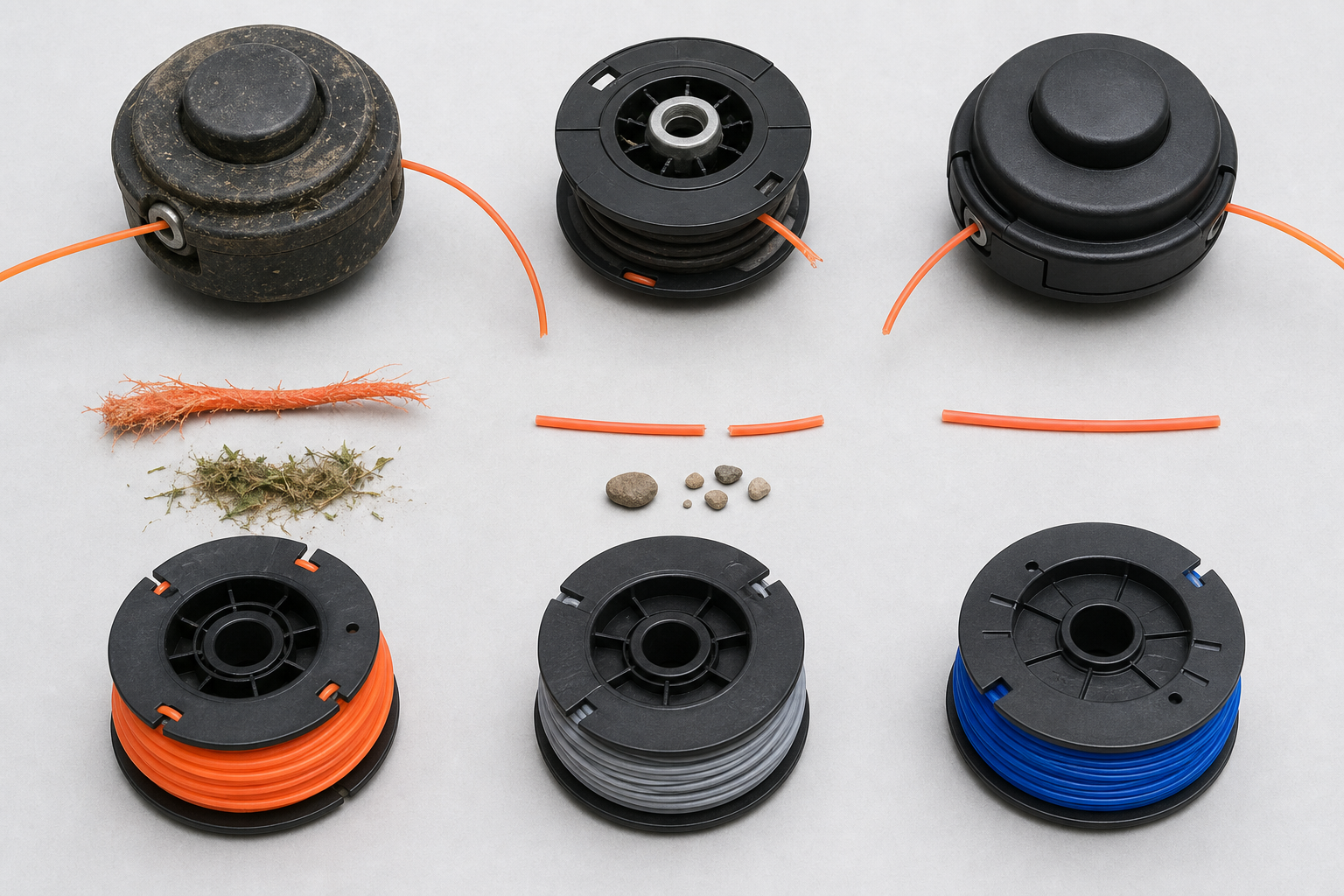
If your trimmer line keeps snapping every few minutes, you’re not alone. This question comes up often in owner forums, especially from DIY homeowners who just installed a fresh spool or switched to a different replacement trimmer line. In many cases, the problem isn’t the trimmer itself—it’s the line size, the way the line is wound, how it’s being fed, or how the trimmer is being used around hard surfaces like fences, walls, and edging. The good news is that most line-break issues are easy to diagnose and fix before you spend money on parts you don’t need.
Start With the Right Trimmer Line Size and Type
One of the most common reasons trimmer line breaks too fast is using the wrong gauge. Community complaints often center around line that snaps constantly, only to find out the owner installed a line diameter that’s either too thin for the job or not approved for that trimmer head.
Check your owner’s manual or the markings on the trimmer spool or bump-feed head. Most homeowner string trimmers are designed for a specific range, such as:
- .065” line for light grass trimming
- .080” line for average residential use
- .095” line for heavier weeds and tougher conditions
If the line is too thin, it can break quickly when it contacts dense grass, weeds, chain-link fencing, wood edging, concrete, or brick. If the line is too thick, it may not feed properly and can bind inside the spool, leading to sudden snapping at the eyelets.
Also pay attention to line shape. Round line is usually the most durable and least prone to feeding issues. Twisted, serrated, or multi-sided line can cut aggressively, but some heads and spool designs handle simple round line better. If you’re dealing with frequent breaks and want reliability first, round replacement trimmer line is often the safest choice.
A few practical tips:
- Use only the diameter your trimmer manufacturer recommends
- For routine yard maintenance, don’t oversize line just because it looks stronger
- If your trimmer has a smaller spool, heavier line may reduce feed performance
- Buy quality replacement trimmer line; bargain line is sometimes brittle or inconsistent in diameter
If you recently switched brands and the breakage started right away, the line itself may be the issue.
Inspect the Spool and Bump-Feed Head for Feeding Problems
A lot of owners assume the line is “breaking,” when in reality it’s hanging up inside the head and tearing off short. This is especially common with worn trimmer spools or bump-feed heads.
Remove the spool and inspect these areas:
- Spool grooves for melted plastic or rough spots
- Eyelets where line exits the head
- The spring and cap in the bump-feed assembly
- Cracks in the spool itself
- Line crossing over itself inside the spool
If the line is wound too tightly, fed in the wrong direction, or overlapped unevenly, it can bind as the head spins. That creates friction and heat, which weakens the line and causes it to snap near the outlet. Worn eyelets can also act like little cutting edges.
When rewinding a spool:
- Cut equal lengths of replacement trimmer line if your spool requires manual loading.
- Follow the directional arrows on the spool.
- Wind neatly and evenly, without crossing the line.
- Don’t overfill the spool.
- Leave the correct amount of line exposed through the eyelets.
If the spool is damaged, replace it. If the bump-feed head is badly worn, replacing the whole bump-feed head may solve repeated line-feed problems faster than trying to nurse along worn internal parts.
For many homeowners, installing a new prewound spool is the easiest way to rule out loading mistakes. If a new spool feeds properly, the issue was likely winding or spool wear rather than the trimmer itself.
Reduce Breakage Around Fences, Walls, and Edging
Another major source of line failure is contact with hard surfaces. Owners often report that the line works fine in open grass but breaks constantly near fence posts, foundations, curbs, and stone borders. That’s normal to a point—trimmer line is designed to cut grass and light weeds, not grind against masonry.
Here’s what usually happens: the line extends at high speed and repeatedly slaps a fixed hard edge. Concrete, brick, metal fencing, and wood corners can chew through line very quickly.
To reduce breakage:
- Trim with the tip of the line, not the full length
- Keep the head slightly away from walls and posts
- Let line do the cutting instead of forcing the head into obstacles
- Slow down in dense areas and around hardscape
- Use an edger or hand tool for spots where the trimmer line gets destroyed
Technique matters more than many homeowners realize. If you “lead” with the spinning line into a fence or foundation, it will vanish fast. A lighter touch, using only the outer inch or two of line, usually improves both cutting performance and line life.
Also check the trimmer guard and line cutter blade. If the guard is missing, bent, or the cutter blade is damaged, line length may be excessive, causing more whipping and breakage. The cutter should trim the line to the correct operating length after fresh feed. Too much exposed line increases strain on the spool and the line itself.
Check for Brittle, Old, or Poorly Stored Line
Replacement trimmer line can age out. If it’s been sitting in a hot shed, garage attic, or truck toolbox for years, it may have dried out or become brittle. That line often snaps much more easily, even when everything else is correct.
Signs of bad line include:
- It feels stiff instead of slightly flexible
- It breaks with light hand bending
- Freshly loaded line snaps almost immediately
- Breakage is consistent no matter where you trim
Many techs and experienced owners recondition line by soaking it in water for a day before use. Nylon line can benefit from a little moisture, which helps restore flexibility. This won’t save every old spool, but it can improve performance if the line has dried out.
Storage recommendations:
- Keep replacement trimmer line sealed or in a container
- Store out of direct sunlight
- Avoid prolonged high heat
- Don’t leave line loose where it can kink or collect dirt
If your line is several seasons old and gives you trouble, replacing it with fresh line is often worth it.
Match Your Head Setup to the Work You’re Doing
Sometimes the real fix is not just changing line, but changing the trimmer spool or bump-feed head setup to better match your yard. A light-duty head doing heavy weed clearing near masonry is going to burn through line fast.
If you regularly maintain:
- Thick weeds
- Long property lines
- Fence rows
- Stone edging
- Large overgrown areas
then a more durable bump-feed head or a head designed for heavier gauge line may be a better fit. Homeowners often try to make a light-duty spool handle every job, and that leads to constant feeding issues, breakage, and frustration.
When choosing parts, look for:
- Compatibility with your trimmer model
- Approved line diameter range
- Easy loading design
- Durable eyelets or reinforced outlets
- Good reviews for feeding consistency
If your current trimmer spool jams often, replacing worn spool components can restore proper feed. If the head design itself is troublesome, upgrading to a compatible replacement bump-feed head may save time and line over the long run.
Watch: Video Walkthrough
FAQ
Why does my trimmer line break when I hit a fence or wall?
Because trimmer line is made to cut vegetation, not hard surfaces. Concrete, brick, metal, and wood edges wear it down quickly. Use a lighter touch and keep the head slightly away from obstacles.
Is thicker trimmer line always better?
No. If the line is thicker than your spool or bump-feed head is designed for, it may bind, feed poorly, or snap from friction. Always use the diameter recommended for your trimmer.
Should I replace the spool or just the line?
If the spool is cracked, warped, or causing the line to hang up, replace the spool. If the head is worn at the eyelets or won’t feed correctly, replacing the bump-feed head may be the better repair.

Find the right part on Amazon
Check price, stock and fitment — ships direct from Amazon.
§ Parts


