§ Journal · Jun 2, 2026
Craftsman V60 vs Ryobi 40V HP — Replacement Spool Comparison for 2026
Comparing spool systems, line compatibility, and aftermarket options between Craftsman's V60 and Ryobi's 40V HP trimmer platforms heading into 2026.
Published · Last updated:
Craftsman V60 vs Ryobi 40V HP — Replacement Spool Comparison for 2026
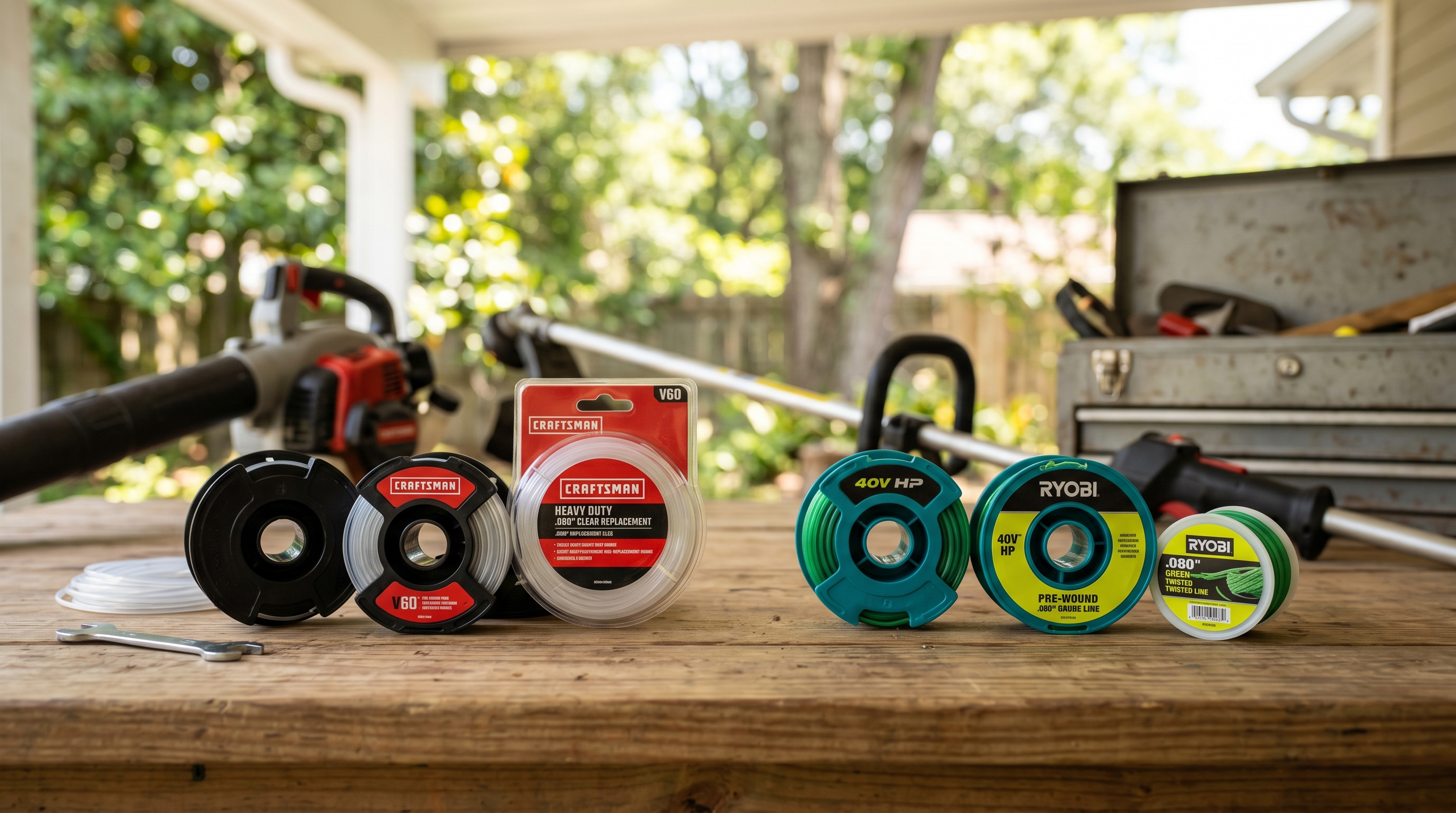
For homeowners shopping for replacement trimmer spools, the brand name on the tool is only part of the story. In 2026, two cordless platforms that still generate a lot of interest are the Craftsman V60 string trimmer line—especially the CMCST960 series—and Ryobi’s 40V HP family, including models like the RY40250 and the RY40HPST02B Whisper Series. Both are built for residential yard work, but their spool systems are not interchangeable, and the differences matter when it is time to replace line, reload a head, or buy aftermarket parts.
If you are comparing these systems strictly from a spool-replacement point of view, Ryobi generally gives homeowners more head variations and more replacement choices, while Craftsman tends to be simpler but narrower in compatibility. The key is knowing exactly which trimmer head is on your machine before ordering anything.
Platform overview: Craftsman V60 vs Ryobi 40V HP
The Craftsman V60 platform, particularly the CMCST960 series, is aimed at homeowners who want a stronger cordless trimmer than entry-level 20V tools. These trimmers typically use a straightforward bump-feed cutting head in the Weedwacker tradition: tap the head on the ground while running, and more line advances. For many users, that design is familiar and easy to live with.
Ryobi’s 40V HP platform covers a wider range of trimmers and head styles. The RY40250 and similar units are common examples, while the RY40HPST02B Whisper Series adds newer design changes focused on quieter operation and updated head hardware. Ryobi also has more overlap with attachment-capable systems, which affects not just trimming performance but also spool selection and replacement-part compatibility.
From a homeowner’s perspective, Craftsman is often the simpler ecosystem. Ryobi is the broader ecosystem. That difference becomes very clear once you start looking for replacement spools.
Spool design differences: bump feed vs Reel-Easy and Whisper heads
The most important mechanical difference is the trimmer head itself.
Craftsman V60 CMCST960-series trimmers generally use a Weedwacker-style bump-feed head. That means the spool is designed around a specific hub, cap, and internal winding arrangement intended for that Craftsman head. It is a conventional setup: remove the cap, replace or reload the spool, and continue trimming. For many DIY users, this system is familiar, but it also means you need a spool that matches that exact head design.
Ryobi uses several spool systems across its 40V HP lineup. Many models use the company’s Reel-Easy or Reel-Easy+ head design, which is built for faster reloading and often has a different internal structure from a standard bump-feed spool. The newer Whisper Series head adds another variation. While it may still be a bump-feed style in practical use, the head geometry, spool dimensions, arbor fit, cap design, and line path can differ from older Ryobi heads.
In plain terms, “Ryobi 40V HP spool” is not one single thing. There are multiple head styles under that platform. Craftsman V60 is usually less fragmented, but that does not make it cross-compatible with anything else.
Line gauge compatibility: .080 inch vs .080 and .095 inch
Line diameter is another major separator.
Craftsman V60 trimmers in the CMCST960 family are commonly set up around .080-inch line. That is a standard size for residential trimming and edging. It offers a good balance of run time, cutting ability, and spool capacity. If you use heavier line than the head is designed for, feeding can become inconsistent and motor strain can increase.
Ryobi 40V HP models are more flexible, depending on the head. Some support .080-inch line, while others can run .095-inch line. That extra capacity is useful for homeowners dealing with heavier weeds, fence-line growth, or rougher trimming conditions. But it also means you cannot assume every Ryobi 40V HP trimmer takes the same spool or line gauge.
For spool buyers, this matters because a spool preloaded with .080-inch line may fit one head type, while another Ryobi head may be designed around .095-inch line or may allow both with different performance expectations. Always match the spool and line size to the specific head, not just the battery platform.
Aftermarket spool availability: Ryobi usually has more options
When it comes to aftermarket replacement spools, Ryobi usually has the advantage in sheer availability.
Because Ryobi 40V trimmers are widespread and the brand has a large homeowner following, more third-party manufacturers tend to produce compatible spools, caps, and reload parts for Ryobi heads. That does not mean every Ryobi model is easy to source for—especially newer Whisper head variations—but overall the pool of available replacements is broader.
Craftsman V60 replacement spools can be harder to find, especially compared with the more common 20V residential trimmer market. Aftermarket support exists, but it is typically more limited by model and head style. Homeowners with a CMCST960-series tool may find fewer universal-looking options and a greater need to match part numbers carefully.
So which platform is easier for replacement parts? In general:
- More aftermarket options: Ryobi 40V HP
- Potentially harder to source: Craftsman V60, especially for exact-fit spool assemblies
Cross-compatibility myth-busting: no, the spools do not swap
A common mistake is assuming that if two cordless trimmers use similar line sizes and both are bump-feed designs, their spools can be swapped. That is not how these systems work.
No, you cannot reliably use Ryobi spools in a Craftsman V60 trimmer, or Craftsman spools in a Ryobi 40V HP trimmer.
The reason is not the line itself. The problem is the hub design. Spools are built around specific dimensions for the center arbor, locking tabs, cap interface, winding depth, spring fit, and line exit alignment. Even if a spool looks close in photos, a mismatch can cause poor feeding, cap failure, vibration, or complete incompatibility.
For homeowners ordering aftermarket parts online, this is one of the biggest areas where returns happen. Similar brand category does not mean compatible spool system.
Expand-It on Ryobi vs dedicated Craftsman heads
Another difference that affects spool selection is Ryobi’s use of the Expand-It attachment system on many models. Attachment-capable trimmers may use different shaft and head arrangements than fixed-head trimmers, and that can influence which replacement spool or head assembly you need. Even within Ryobi 40V HP, an Expand-It-capable model may not use the same spool setup as a non-attachment Whisper Series unit.
Craftsman V60 trimmers are more often built around dedicated trimmer heads rather than a broad attachment ecosystem. That reduces some confusion, but it also means the head is more model-specific. There is less chance of “one Ryobi-style solution fits several products,” but also less flexibility.
For buyers, the takeaway is simple: attachment capability is not just a feature list item. It can affect replacement-part fit.
Practical recommendation for 2026 buyers
If you own a Craftsman V60 CMCST960-series trimmer or a Ryobi 40V HP model like the RY40250 or RY40HPST02B Whisper Series, the safest way to buy replacement spools is to verify the exact model number and head type first.
Do not order by brand alone. Do not order by battery voltage alone. And do not assume that because two tools use .080-inch line, they share the same spool.
For most DIY homeowners, Ryobi offers a wider aftermarket landscape, but also more head variation to sort through. Craftsman V60 is often simpler, yet exact-fit parts can be less common. In both cases, a few extra minutes spent checking the model number, original spool style, and supported line gauge will save time and frustration.
That is the real comparison for 2026: not which trimmer is “better,” but which spool system is easier to identify, match, and replace correctly.

Find the right part on Amazon
Check price, stock and fitment — ships direct from Amazon.
§ Parts


