§ Journal · Jun 2, 2026
EGO 56V PowerLoad Trimmer Line Compatibility — What Fits the 2026 Models
EGO updated its PowerLoad trimmer lineup for 2026. Here is what changed, which trimmer line diameters work, and whether your current spools still fit.
Published · Last updated:
EGO 56V PowerLoad Trimmer Line Compatibility: What Fits the 2026 Models
EGO’s 56V string trimmers have earned a strong following because they solve one of the most annoying parts of trimmer ownership: reloading line. With the PowerLoad system, you feed the line through the head, push a button, and the tool winds it for you. For homeowners who trim weekly, that feature alone is a big deal.
For 2026, the main models drawing attention are the EGO ST1523S and EGO ST1623S, both part of the company’s 56V cordless platform and both built around PowerLoad technology. If you already own earlier EGO attachments, spools, or bulk line, the big question is simple: what still fits, and what should you avoid?
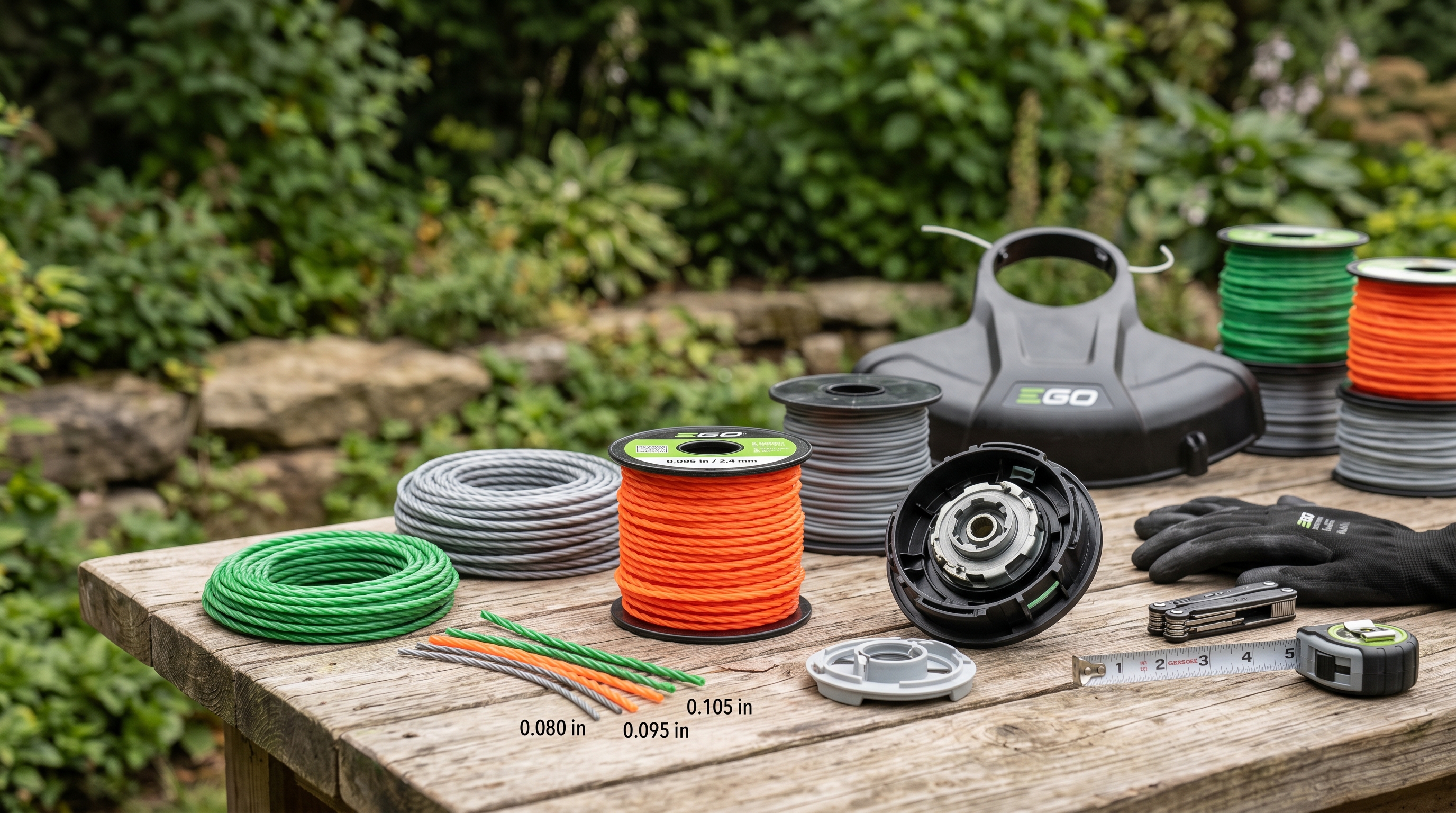
The short answer is that line compatibility is still centered on .080-inch and .095-inch trimmer line, but the correct choice depends on how the head feeds, how heavily you trim, and whether you are using OEM or aftermarket spool parts.
What’s new in EGO’s 2026 trimmer lineup
The ST1523S and ST1623S continue EGO’s 56V approach: cordless tools designed to match gas-level trimming performance without carburetors, pull starts, or fuel mixing. These 2026 models stay focused on homeowner and prosumer use, with PowerLoad remaining the headline feature.
From a service and compatibility standpoint, the important part is not that EGO reinvented the trimmer head, but that the 2026 models still rely on the same basic line-loading concept users already know. That’s good news for owners upgrading from older EGO 56V trimmers. In most cases, your habits do not need to change. What does matter is using the correct line diameter and the right spool setup for the specific head.
The other practical point is that EGO has kept the tools inside its broader 56V battery platform, which remains backward-compatible. If you already have EGO 56V batteries, the move to a 2026 trimmer does not force you into a new battery system.
How the PowerLoad system works
PowerLoad is simple when everything is matched correctly. You cut a length of trimmer line, insert it through the eyelets in the head until both sides are even, then press the PowerLoad button. The internal mechanism rotates the spool and winds the line automatically.
That system depends on line moving through the head at the right speed and friction level. This is where line diameter matters.
If the line is too thick, too stiff, or out of spec, the head may struggle to wind it smoothly. If the line is too light or too soft, it may wind unevenly, bind, or feed inconsistently during use. PowerLoad heads are convenient, but they are less forgiving than old manual-wind heads when you use the wrong material.
In other words, compatibility is not just about whether the line physically fits through the holes. It also has to wind properly and feed reliably under bump-feed operation.
Which trimmer line gauges work: .080 and .095
For the 2026 ST1523S and ST1623S, the two line sizes homeowners will care about are .080-inch and .095-inch.
.080-inch line is generally the better choice for lighter trimming. It loads easily, places less strain on the winding mechanism, and is usually the smoothest option for routine grass edging and cleanup around sidewalks, fences, and planting beds. If your yard work is mostly standard lawn maintenance, .080 line is often the most trouble-free option in a PowerLoad head.
The downside is durability. In thicker weeds, along chain-link fences, or around hardscape, .080 line wears faster and breaks more easily.
.095-inch line is the heavier-duty option. It holds up better in dense grass, tougher weeds, and rougher trimming conditions. For many users, it also reduces how often they need to stop and reload line.
The tradeoff is that .095-inch line demands a little more from the PowerLoad system. It must be the correct shape, stiffness, and tolerance. If the line is oversized, sharply edged, or cheaply made, you are more likely to see loading resistance or feeding problems.
For most DIY homeowners, the decision is practical: use .080 for maximum ease and smooth feeding, and move to .095 if your trimming conditions justify the heavier line.
Do existing EGO pre-wound spools still fit?
A common question with the 2026 models is whether older EGO consumables still carry over, especially AH1531 and AH1521 pre-wound spool options.
In general, these existing EGO spool part numbers remain the reference point users should check first for PowerLoad-compatible heads. If your trimmer head is designed around the same spool geometry and feed system used on prior 56V PowerLoad units, those spool families are typically still relevant for the ST1523S and ST1623S.
That said, homeowners should not assume every EGO spool is universal across every trimmer generation. The safe approach is to match:
Model number, spool style, and line diameter specification.
If a spool is listed for ST1523S or ST1623S, then earlier EGO part numbers such as AH1531 or AH1521 may still fit depending on the head configuration. But always verify the trimmer’s manual or replacement head listing rather than relying on appearance alone.
Aftermarket spool compatibility: what to look for
If you buy aftermarket replacement spools or bulk line, compatibility comes down to a few basics.
First, the spool has to match the PowerLoad head dimensions. The center bore, outer diameter, height, and locking surfaces all need to align correctly. A spool that is only slightly off can create drag, poor winding, or erratic bump feed.
Second, the spool needs to be rated for the correct line gauge. A spool intended for .080 may not behave properly when packed with .095, even if you can force it in.
Third, pay attention to the quality of the line channel and winding surface. Cheap spools often have rough molding edges, weak plastics, or inconsistent tolerances. Those flaws cause line overlap, heat buildup, and feed problems.
A good aftermarket replacement should be built specifically for EGO PowerLoad models, not just advertised as “universal.”
Common feeding problems with the wrong gauge
Most line feeding complaints trace back to one issue: the wrong line in the head.
If the line is too thick, the trimmer may:
Feed slowly, jam in the spool, or fail to auto-wind smoothly.
If the line is too thin or too soft, it may:
Tangle inside the head, wear too quickly, or advance unevenly.
The fix is usually straightforward. Remove the spool, clear any crossed or welded line, and reload with the correct diameter. If you are having repeat trouble, inspect the line itself. Some off-brand line runs oversized, even when labeled .095. In a PowerLoad system, a few thousandths of an inch can make a real difference.
Also check that the line was cut to a reasonable loading length and inserted evenly before activating PowerLoad. Uneven starts often create crossed wraps, which lead to poor feed later.
The 56V platform is still backward-compatible
One piece of good news for current EGO owners is that the 56V battery platform remains backward-compatible. The 2026 trimmers are still part of the same battery family, so existing 56V packs remain useful across older and newer EGO tools. That does not guarantee every accessory or spool crosses over, but it does make upgrading simpler.
Final word
For the 2026 EGO ST1523S and ST1623S, line compatibility is not complicated if you stay within spec. .080-inch line offers the easiest loading and feeding for normal lawn care, while .095-inch line gives better durability in tougher conditions but requires closer attention to line quality and spool fit.
Practical tip: if your PowerLoad head has repeated feeding issues, start by switching to a known-good .080-inch round line before replacing parts—many “head problems” turn out to be line-selection problems.

Find the right part on Amazon
Check price, stock and fitment — ships direct from Amazon.
§ Parts


