§ Journal · May 28, 2026
Trimmer Line Gauge Guide: .065 vs .080 vs .095 — Which to Use
Help buyers pick the right gauge for their trimmer. Thinner = less power needed, thicker = tougher cuts. Match to voltage/engine size.
Published · Last updated:
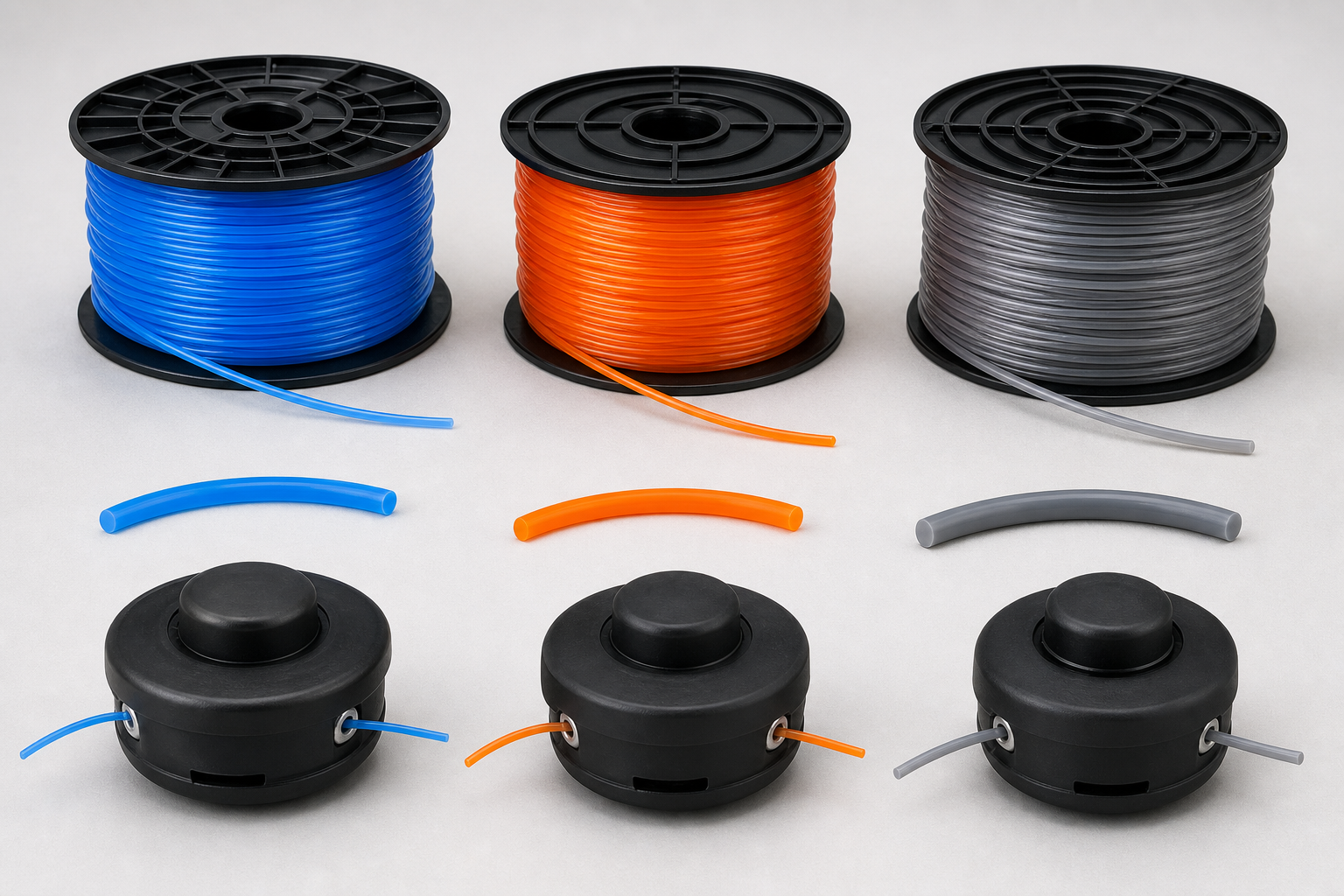
Trimmer Line Gauge Guide: .065 vs .080 vs .095 — Which to Use
Choosing the right trimmer line gauge is one of the easiest ways to make your string trimmer cut better, feed more reliably, and avoid overstressing the machine. Go too thin, and line breaks constantly in heavy grass. Go too thick, and a smaller trimmer may struggle to spin it, drain batteries faster, or bog down a gas engine.
For most homeowners, the choice comes down to three common sizes: .065”, .080”, and .095”. As a rule, thinner line needs less power and suits lighter trimming, while thicker line is tougher and better for dense weeds and rougher property edges. The best gauge depends on what you cut, how often you trim, and the size or voltage of your trimmer.
Understanding what line gauge actually changes
Line gauge is simply the diameter of the trimmer line. A bigger diameter gives you:
- More durability
- Better resistance to snapping on fences, trees, and hardscape
- More cutting mass for thicker grass and weeds
But bigger isn’t always better. Thicker line also means:
- More load on the motor or engine
- Slower spool acceleration
- Shorter runtime on battery trimmers
- Potential feed issues if your head or spool isn’t designed for that size
That’s why the right gauge should match both the job and the machine.
In general:
- .065” = light-duty trimming
- .080” = general-purpose homeowner use
- .095” = heavier-duty residential and light commercial work
Before buying line, always confirm your trimmer head or spool is rated for that diameter. Many auto-feed spools and factory heads have a narrow approved range, and forcing oversized line can cause poor feeding or premature wear.
.065 line: Best for light-duty cordless and small electric trimmers
If you have a compact cordless trimmer or a basic corded electric model, .065” line is usually the starting point. This is the lightest common gauge and works best where the trimmer is used more like a finishing tool than a brush cutter.
Best use cases
- Touch-up trimming around sidewalks and flower beds
- Soft grass
- Frequently maintained suburban lawns
- Small yards with minimal weeds
Typical machine match
- 20V to 40V cordless trimmers
- Smaller corded electric trimmers
- Entry-level curved-shaft units
- Low-displacement gas trimmers, though many gas models can use thicker line
Pros
- Requires less power to spin
- Extends runtime on smaller battery tools
- Easier on lighter-duty motors
- Usually feeds smoothly in small auto-feed spools
Cons
- Breaks faster in thick weeds
- Wears quickly along chain-link fence, edging, or rocky borders
- Less effective if grass is overgrown
Pricing tier
In most catalogs, .065 line is usually the budget to mid-tier option, often sold in homeowner-focused refills and pre-wound spools. It’s commonly the least expensive per pack, though not always the best value if you burn through it quickly.
Who should choose .065?
Choose .065 if your trimmer is lightweight, your yard is maintained regularly, and you mainly trim clean lawn edges rather than attack tall weeds.
.080 line: The best all-around choice for most homeowners
For many buyers, .080” line is the sweet spot. It offers a noticeable jump in durability over .065 without requiring as much power as .095. If you own a modern battery trimmer or a typical residential gas unit, this is often the safest all-purpose choice.
Best use cases
- Routine trimming around homes, sheds, and fences
- Moderate grass and light weeds
- Slightly overgrown lawn edges
- Medium-size residential properties
Typical machine match
- 40V to 60V cordless trimmers
- Most standard homeowner gas trimmers
- Straight-shaft residential units
- Many universal bump-feed heads and reloadable heads
Pros
- Better wear resistance than .065
- Good balance of cutting performance and efficiency
- Widely compatible with homeowner trimmer heads
- Handles mixed trimming conditions well
Cons
- Still may struggle with thick stemmy weeds
- Can be too heavy for some very small 20V tools
- Not as long-lasting as .095 in rough conditions
Pricing tier
.080 line usually lands in the mid-price range, and it’s widely available in bulk rolls, donut packs, and spool refills. For homeowners who trim weekly, it often delivers the best cost-per-use.
Who should choose .080?
If you want one gauge that can handle most yard work without overloading your trimmer, .080 is the default recommendation. It’s especially good for homeowners using 40V cordless tools or mid-size gas trimmers.
.095 line: For tougher growth and more powerful trimmers
When you’re dealing with thicker grass, tougher weeds, ditch lines, or larger properties, .095” line starts to make sense. It’s a heavier-duty gauge that holds up better under abuse, but it needs a stronger machine to run properly.
Best use cases
- Tall grass and dense growth
- Heavier seasonal cleanup
- Coarse weeds around fence lines
- Larger lots and less frequently maintained areas
Typical machine match
- 56V, 60V, and 80V high-output cordless trimmers
- Larger residential gas trimmers
- Many 25cc+ gas string trimmers
- Universal bump-feed heads rated for .095 line
Pros
- More durable in rough trimming conditions
- Better for thicker, fibrous material
- Less frequent breakage
- Strong choice for bigger yards and tougher maintenance
Cons
- Can reduce runtime on battery units
- May bog down small electrics and low-power cordless tools
- Not compatible with every stock spool or head
- Often overkill for simple lawn touch-up work
Pricing tier
.095 line is usually mid- to premium-priced, especially in professional-grade twisted, serrated, or reinforced blends. While the initial roll costs more, many users find it economical in heavy trimming because it lasts longer between reloads.
Who should choose .095?
Choose .095 if your trimmer has the power for it and your property regularly includes dense grass, weeds, or rough perimeter work. It’s often the right fit for larger battery platforms and stronger gas units, but not for every homeowner tool.
How to match gauge to voltage or engine size
A simple way to narrow your choice is to match line gauge to the power class of your trimmer.
Battery trimmers
- 20V to 24V: Usually best with .065
- 36V to 40V: Usually .065 or .080
- 56V to 60V: Usually .080 or .095
- 80V+: Often handles .095 well, depending on the head
Battery output varies a lot by brand and motor design, so voltage alone isn’t everything. A premium 40V brushless trimmer may outperform a cheap higher-voltage unit. Still, the chart above is a good starting point.
Gas trimmers
- Under 25cc: Usually .065 or .080
- 25cc to 30cc: Usually .080 or .095
- 30cc+: Often comfortable with .095
A practical rule
If your trimmer:
- Struggles to reach full speed
- Eats battery quickly after switching line sizes
- Feeds poorly with thicker line
…you’ve probably gone too large.
If your line:
- Snaps constantly
- Wears down too fast
- Can’t handle the grass you cut
…you likely need to step up a size.
Gauge isn’t the only factor: spool and head fitment matter too
Even if the motor can handle a thicker line, your spool or trimmer head must be designed for it. This is where many buyers get stuck.
Pre-wound spools
Factory spools are convenient, but they’re usually strict about line diameter. A spool designed for .065 may not feed .080 correctly, and forcing thicker line can jam the housing.
Bulk replacement line
Bulk line gives you more flexibility and better value, but only if your spool or head supports it. Check:
- Approved line diameter range
- Maximum line capacity
- Winding direction
- Whether the head is single-line or dual-line
Bump-feed heads
A reloadable bump-feed head can be a smart upgrade if you want to run tougher line or avoid disposable spool cartridges. Many universal bump heads support multiple gauges, often including .080 and .095, and are popular with homeowners moving from light-duty factory spools to a more durable setup.
Our picks
If you’re shopping by gauge, here’s the simplest way to buy:
-
Best for small cordless trimmers: .065 replacement trimmer line or pre-wound spool refills
Ideal for 20V to 40V tools used on well-kept lawns. Best if your OEM spool specifically calls for .065. -
Best all-around homeowner choice: .080 trimmer line
Our top recommendation for most DIY buyers. It fits a wide range of residential trimmers, balances durability with easy feeding, and works especially well on 40V cordless and standard gas models. -
Best for tougher trimming: .095 trimmer line
Best for larger battery trimmers, 25cc+ gas machines, and heavier grass or weeds. Check head compatibility before stepping up. -
Best upgrade for flexibility: universal bump-feed trimmer head rated for .080/.095 line
A great option if your original spool system wears out quickly or limits you to lighter line. It can also reduce refill cost over time if you prefer bulk line.
If you’re unsure, the safest default for most homeowners is .080 line, unless your trimmer manual specifically limits you to .065.
FAQ
Is .095 line better than .080?
Not automatically. .095 is tougher, but it also requires more power and isn’t compatible with every spool or head. For average residential trimming, .080 is often the better balance.
Can I use .080 line in a trimmer that came with .065?
Only if the manufacturer approves it and the spool/head is designed for that diameter. If not, feeding problems and motor strain can result.
What line gauge is best for battery trimmers?
For most battery units:
- 20V to 24V: .065
- 40V: usually .080
- 56V to 80V: often .080 or .095
Always confirm the head rating and owner’s manual.
Does thicker line cut better?
Thicker line is generally more durable and better in heavy growth, but that doesn’t mean cleaner or faster results on every lawn. On light trimming, thicker line can just waste power.
What’s best for weeds?
For tougher weeds, .095 is usually the better choice if your trimmer can handle it. For lighter mixed grass and weeds, .080 is often enough.
Should I upgrade to a bump-feed head?
If your trimmer uses expensive proprietary spools, jams often, or limits you to light line, a bump-feed head can be a worthwhile upgrade. Just make sure the arbor size, rotation direction, and line rating match your trimmer.
If you want, I can also turn this into:
- a more SEO-optimized version,
- a product-category page version with internal-link placeholders, or
- a shorter marketplace listing guide.

Find the right part on Amazon
Check price, stock and fitment — ships direct from Amazon.
§ Parts


