§ Journal · Jun 2, 2026
Weekend Fence Line Cleanup — Which Trimmer Line Gets It Done Without Breaking
How to clear an overgrown fence line in one weekend without burning through spools of broken line.
Published · Last updated:
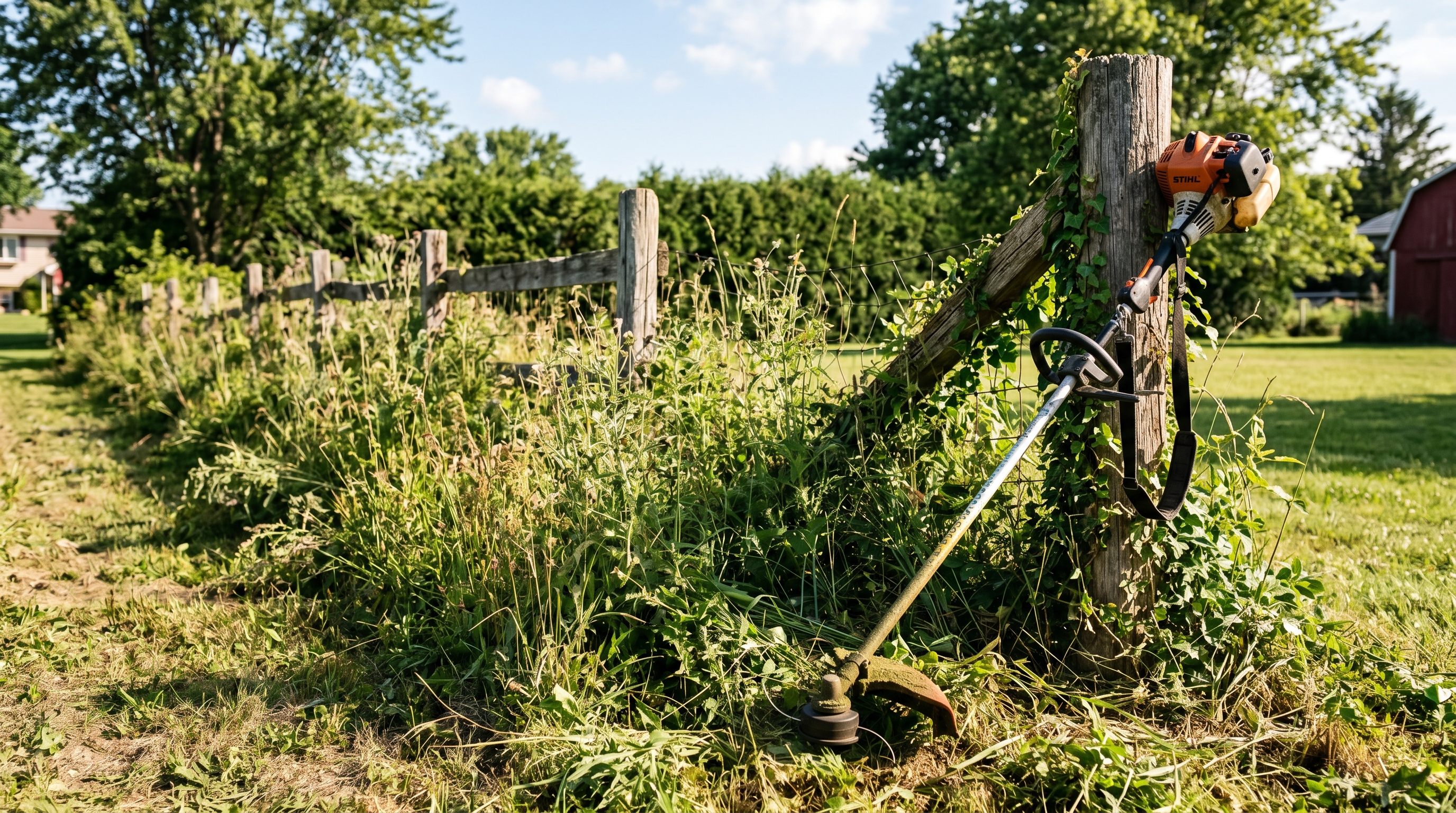
Every property has that one stretch of fence line that gets away from you. Maybe it’s the back property edge behind the shed, or the run along the chain-link that the mower can’t reach. By midsummer, it’s a wall of thick grass, bindweed, and woody stems growing straight through the fence wire. You’ve got a weekend to knock it down. The question isn’t whether your trimmer can handle it — it’s whether the line you’re running can survive the job.
Fence line cleanup is one of the hardest tasks you can throw at a string trimmer. The line isn’t just cutting vegetation — it’s constantly hitting metal posts, wire mesh, wood slats, and rocks hidden in the growth at the base. That contact destroys light-duty line in minutes. Here’s how to pick the right line and approach so you finish the job in one session instead of spending half the day re-spooling.
The problem with fence line trimming
Three things make fence work different from open-yard trimming:
- Hard-surface contact is constant. Every pass sends the line into posts, fence wire, or stone borders. This eats through thin, soft line fast.
- Growth is thick and mixed. You’re dealing with grass, broadleaf weeds, and often woody stems all tangled together. Light line cuts the grass but bounces off the stems.
- Access is tight. You can’t swing wide. You’re working close to the fence, which means the line tip is doing most of the cutting at a narrow radius, increasing wear.
The default .065 line that comes pre-loaded on many homeowner trimmers is not built for this. It will snap on the first fence post and keep snapping every few feet. You’ll burn through a full spool in 20 minutes and still have half the fence to go.
Which line diameter to use
For fence line cleanup, the choice usually comes down to .080 or .095 — and the right answer depends on how bad the growth is and what your trimmer can handle.
.080 — the minimum for fence work
If your fence line is moderately overgrown — tall grass and light weeds, but nothing woody — .080 will get through it with reasonable durability. It handles occasional post contact much better than .065, and most 40V and higher cordless trimmers run it without any power issues.
Choose .080 if:
- The growth is primarily grass and soft-stemmed weeds.
- You maintain the fence line a few times per season and it hasn’t gone fully wild.
- Your trimmer is a mid-range cordless (40V to 56V) that may struggle with heavier line.
.095 — the better choice for heavy overgrowth
If you’re cutting through dense broadleaf weeds, thick stemmy growth, or anything with woody bases, step up to .095. The thicker diameter resists breakage against posts and wire far better, and it has the mass to cut through tough vegetation without just bending around it.
Choose .095 if:
- Growth is knee-high or taller with thick stems.
- You’re clearing a fence line that hasn’t been touched in months (or longer).
- Your trimmer is a higher-output cordless (56V to 80V) or a gas unit rated for .095.
For a deeper comparison of all three common gauges and how to match them to your trimmer’s power class, see the full Trimmer Line Gauge Guide: .065 vs .080 vs .095 and the how-to version at Choosing Trimmer Line Gauge.
Which line shape works best along fences
Diameter isn’t the only variable. The cross-sectional profile of the line changes how well it cuts and how long it lasts against hard surfaces.
Round line is the most durable against post and wire contact. It doesn’t have edges to chip or wear down, so it holds up better over a long fence run. The trade-off is a rougher cut — round line tears rather than slices.
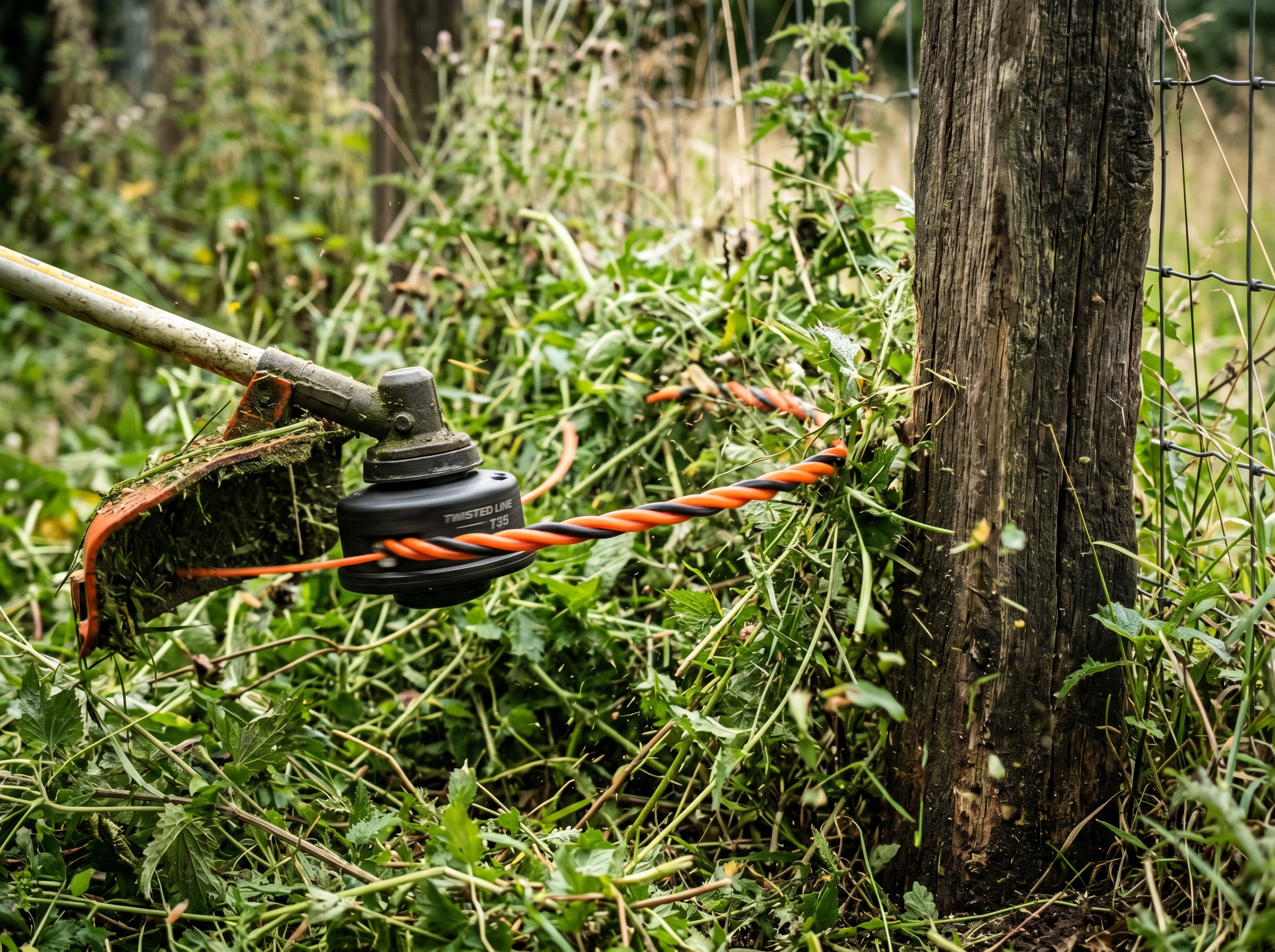
Twisted line cuts cleaner and quieter, but the spiral edges wear faster against metal and stone. For a fence job with heavy post contact, twisted line may not last as long as round.
Serrated or multi-sided line cuts aggressively through thick weeds, which is great for the vegetation part of the job. But the sharp edges wear down quickly against fence posts, and serrated line is usually the most expensive to replace.
For most fence line cleanup, round .095 is the practical winner — it survives post contact and has the mass to push through thick growth. If the fence line is mostly grass without heavy post contact, twisted .080 is a reasonable alternative that gives a cleaner finish. A full comparison of profiles is in Twisted vs Round vs Serrated Trimmer Line.
Technique tips for fence trimming
The right line helps, but technique is what keeps you from burning through it prematurely.
- Don’t force the line into the fence. Let the tip do the cutting. Keep the head a few inches away from the fence and let the line reach the growth at the base. Driving the head straight into a metal post guarantees a break.
- Work in short passes. Don’t try to clear a 50-foot run in one slow walk. Make shorter passes, stepping back to let cut material fall away before the next pass. This reduces buildup around the head that causes jamming.
- Trim from both sides if possible. On chain-link or open-wire fences, clear one side, then walk around and do the other. Trying to reach through the fence puts the line at bad angles and wastes it.
- Go high first, then low. On heavily overgrown sections, take the top growth off first with a sweeping pass, then come back for the base. Trying to cut thick growth from the bottom up bogs the head down and wraps vegetation around the shaft.
- Watch for hidden wire. Old fence lines often have fallen wire, broken ties, or guy-wire anchors buried in the growth. These will snap any line instantly and can damage the trimmer head. If you hear a metallic ping, stop and check before continuing.
Bring a spare spool
Even with the right line and good technique, fence work eats spools faster than open trimming. Bring at least one fully loaded spare spool so you’re not winding line in the field. If you use a bump-feed head with bulk line, pre-cut and wind two loads before you start.
For reliable re-spooling, wind in tight, flat rows following the directional arrow on the spool. The full method is in How to Wind a Trimmer Spool, and if your spool keeps jamming mid-job, the five most common causes and fixes are covered in Why Your Spool Keeps Jamming.
The quick recommendation
| Fence line condition | Line gauge | Line shape | Why |
|---|---|---|---|
| Moderate grass, light weeds | .080 | Twisted | Clean cut, adequate durability |
| Heavy weeds, some woody stems | .095 | Round | Maximum durability against posts |
| Thick brush, neglected for months | .095 | Serrated | Aggressive cut for tough vegetation |
Pick the gauge your trimmer can handle, match the shape to the growth, and bring an extra spool. The fence line that’s been bothering you all summer can be done before lunch. Browse trimmer line and replacement spools in the shop.

Find the right part on Amazon
Check price, stock and fitment — ships direct from Amazon.
§ Parts


