§ How-To
Trimmer Head Types: Auto-Feed vs Bump vs Fixed-Line
Which feed system suits you, the trade-offs of each, and how to upgrade a worn OEM head to a tough universal one.
Published · Last updated:
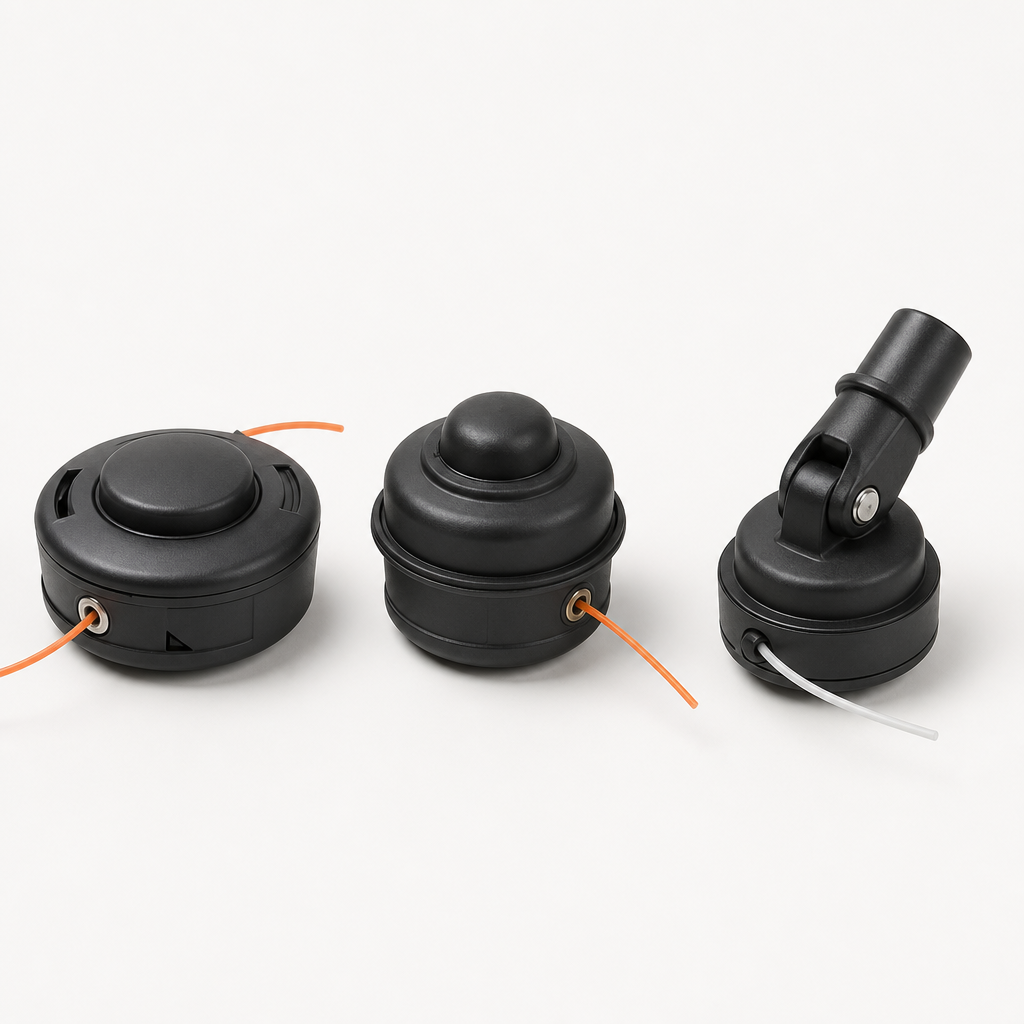
Three feed systems cover almost every string trimmer made. Knowing how each works helps you maintain the one you have — and choose well if you’re upgrading a cracked or worn-out head. Here’s how they compare and when each makes sense.
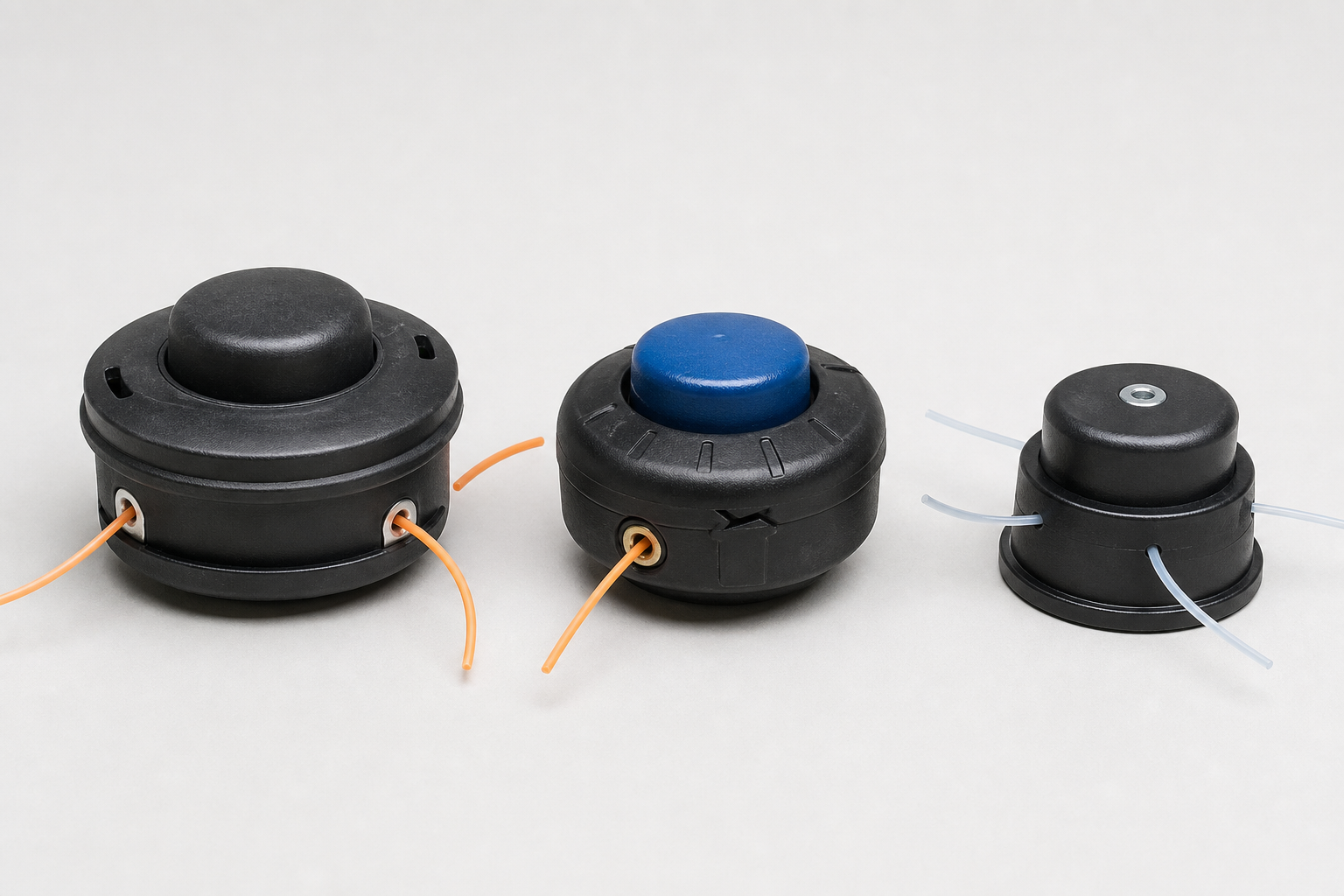
Auto-feed
The head pays out fresh line automatically as the tips wear down, with no input from you. It’s the easiest to use and the standard on homeowner cordless and electric trimmers.
- Pros: nothing to think about; great for casual users.
- Cons: the feed mechanism is the most failure-prone part of any trimmer, and spools are strictly model-specific (an AF-100 won’t fit a Ryobi head).
Bump-feed
You tap (“bump”) the spinning head on the ground and a length of line pays out, trimmed by a blade on the guard. Simple, durable, and the choice on most gas trimmers.
- Pros: few parts to fail, tolerates heavier line, you control feed timing.
- Cons: requires the bump action; bumping on hard pavement wears the head.
Fixed-line (pivoting)
You load short, pre-cut strips of line that pivot on the head. No winding, ever.
- Pros: extremely tough, no spool to jam, great near fences and beds where line breakage is common.
- Cons: you carry pre-cut strips, and running out means re-loading by hand.
Quick chooser
| You want… | Pick |
|---|---|
| Zero fuss, casual trimming | Auto-feed |
| Durability and heavier line | Bump-feed |
| No winding, max toughness | Fixed-line / pivoting |
Upgrading a worn head
If your OEM auto-feed head cracked or the mechanism quit, you don’t have to buy the same fragile part. A universal bump head or pivoting head fits most straight- and curved-shaft trimmers using the included thread adapters, often runs heavier line, and usually costs less than a brand-specific replacement. Confirm your shaft type (straight vs curved) and thread, then browse heads in the shop. If you’re keeping your current head, the most common failure — line not feeding — is usually fixable; see the troubleshooting checklist.

Find the right part on Amazon
Check price, stock and fitment — ships direct from Amazon.
§ Parts


