How-To
How to Measure Your Old Spool to Find a Replacement
Four data points that guarantee the replacement spool actually fits — and how to read each one off the part in your hand.
Published
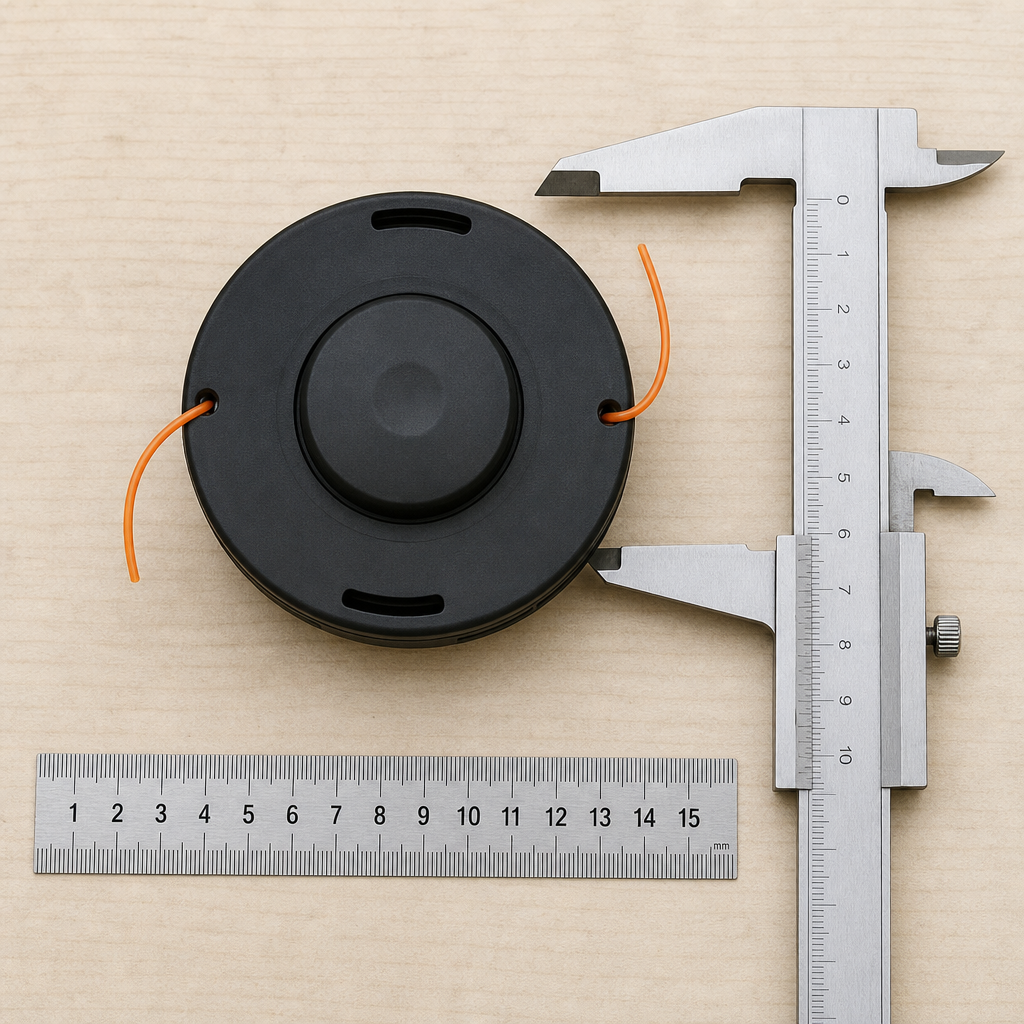
Trimmer spools aren’t universal — a few millimetres of difference in diameter or a different hub means the new one won’t seat or won’t index. Don’t guess; these four data points get you the exact match every time, and most are printed right on the part you’re replacing.
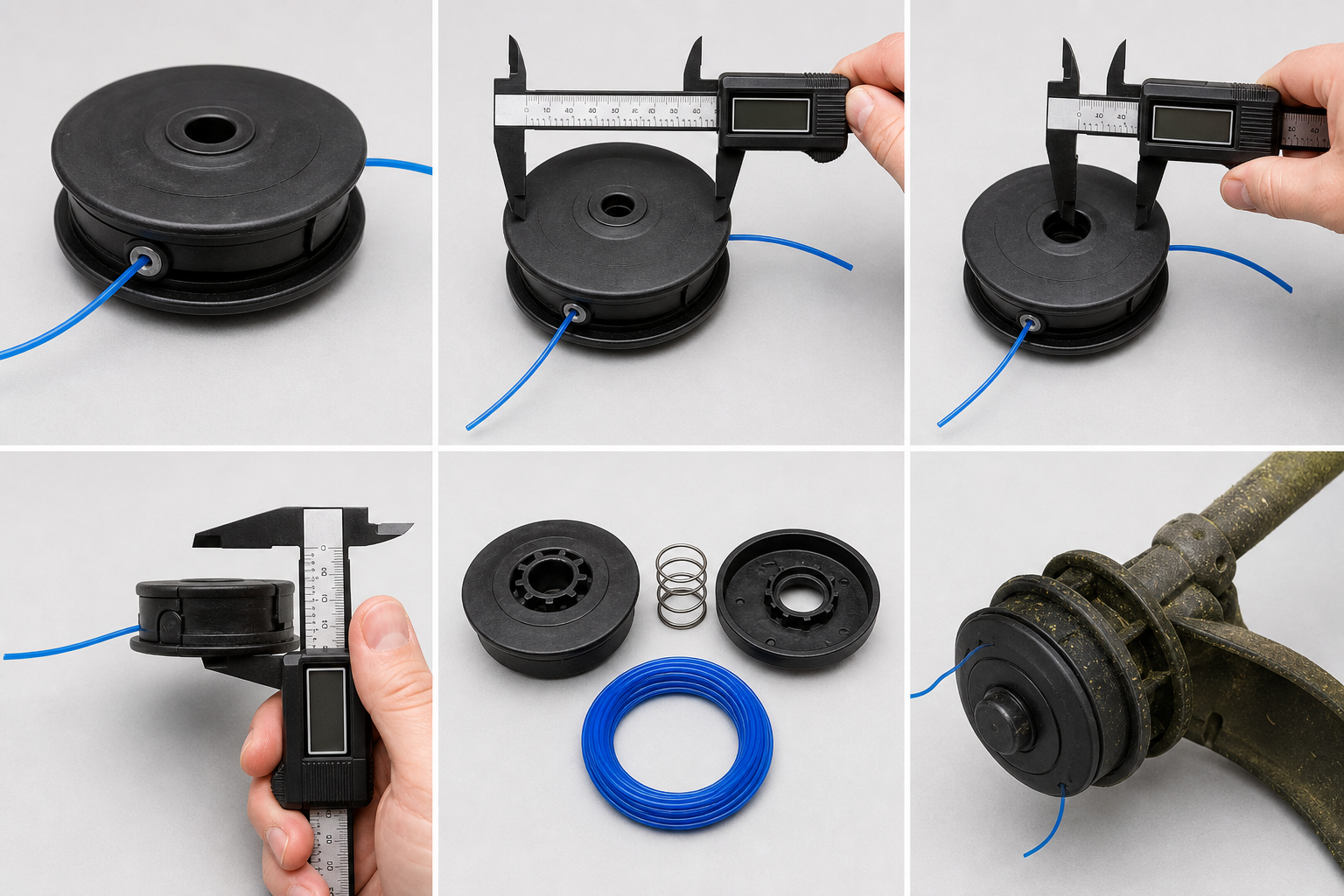
1. Model number and OEM part number (start here)
The fastest path is the part number molded into the old spool (e.g. AF-100, AC14RL3A, 0.065") combined with your trimmer’s model number (on the housing label). Search that and you’ll usually land on the exact replacement with no measuring at all. Note both before you take anything apart.
2. Spool diameter
If there’s no usable part number, measure the spool’s outside diameter across the face with calipers (a ruler will do in a pinch). Even a few millimetres off and the spool won’t fit the cap or the head. Write it down.
3. Center hole and locating features
Measure the center bore (the hole that drops over the post) and note any tabs, notches, or splines around it. These key the spool to the head so it indexes when feeding — a spool with the right diameter but the wrong center won’t drive correctly.
4. Line diameter
Measure the old line with calipers, or read it off the spool (often stamped, e.g. .065). Order the same gauge unless you’re deliberately stepping up — and if you are, make sure your head supports it (see Choosing Trimmer Line Gauge).
Single vs dual line
While you have it apart, note whether the spool holds one line or two (one channel or a divided center). A dual-line head needs a dual-line spool; they’re not interchangeable.
Cross-reference and confirm
Many replacement spools list every compatible model right in the title. Take your part number or measurements to the Brands page, pick your trimmer’s brand, and confirm your model appears in the listing’s fitment list before buying. If you’d rather skip the detective work, identify your head type first with Trimmer Head Types.
Find the right part on Amazon
Check price, stock and fitment — ships direct from Amazon.
Parts


