§ Journal · Jun 2, 2026
Fall Trimmer Storage Guide — Protect Your Line and Spool Over Winter
How to store your string trimmer, spool, and line so everything works on the first pull next spring.
Published · Last updated:
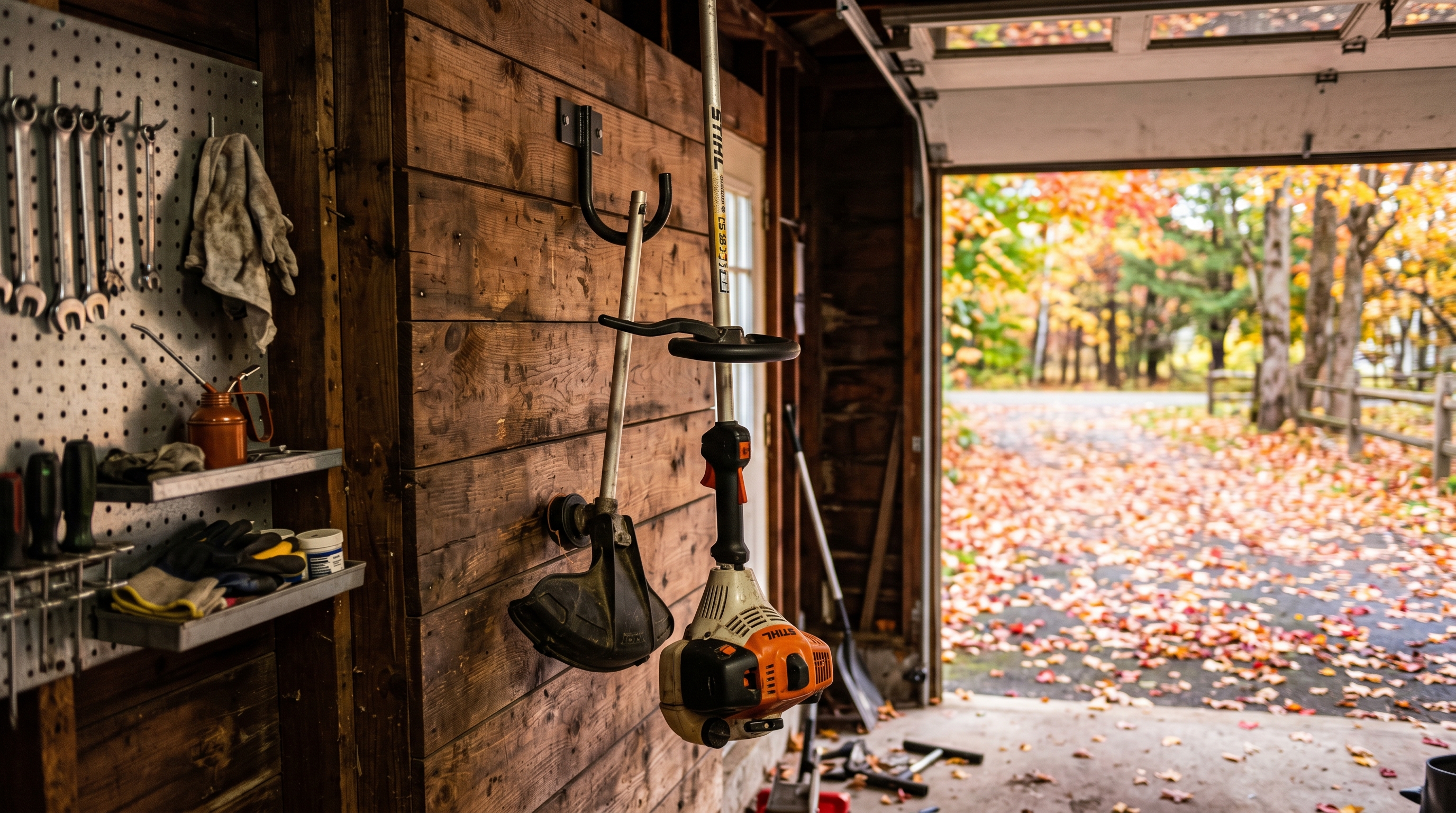
Most trimmer problems that show up in spring were actually caused in fall — by tossing the tool on a shelf with a dirty head, old line, and a dead battery. A few minutes of prep before winter storage keeps your spool, line, and trimmer head in working condition so you’re not replacing parts before the first cut next year. Here’s exactly what to do.
Why winter wrecks trimmer line
Nylon trimmer line is hygroscopic — it absorbs and releases moisture depending on the surrounding air. In a heated house, that’s not a problem. In an unheated garage or shed, the cycle of cold dry air and occasional temperature swings pulls moisture out of the nylon over months.
The result by spring: line that’s stiff, brittle, and prone to snapping the moment it hits anything solid. Dried-out line also loses its flexibility, which means it won’t feed properly through the spool and eyelet. You end up stripping it all off and re-spooling before you can even start trimming.
UV exposure makes things worse. Line stored where sunlight reaches it — hanging on a pegboard near a window, for example — degrades even faster. The outer surface turns chalky and weak while the core stays intact, so it looks fine but breaks on contact.
Step 1: Remove the spool and clean the head
Pop the trimmer head cap, pull the spool, and set it aside. Clean the head housing thoroughly:
- Brush out caked grass, dirt, and sap with a stiff nylon brush.
- Use compressed air to clear the line channels and feed mechanism.
- Wipe the bump knob or auto-feed assembly and confirm the spring still has tension.
This is also a good time to inspect the line eyelet for grooves or burrs. A worn eyelet will shred line all next season, so if it’s damaged, plan to replace the head over winter rather than discovering the problem in April. For help identifying head types and choosing a replacement, see Trimmer Head Types: Auto-Feed, Bump, and Fixed.
Step 2: Deal with the line
You have two options, and the right one depends on how much line is left on the spool.
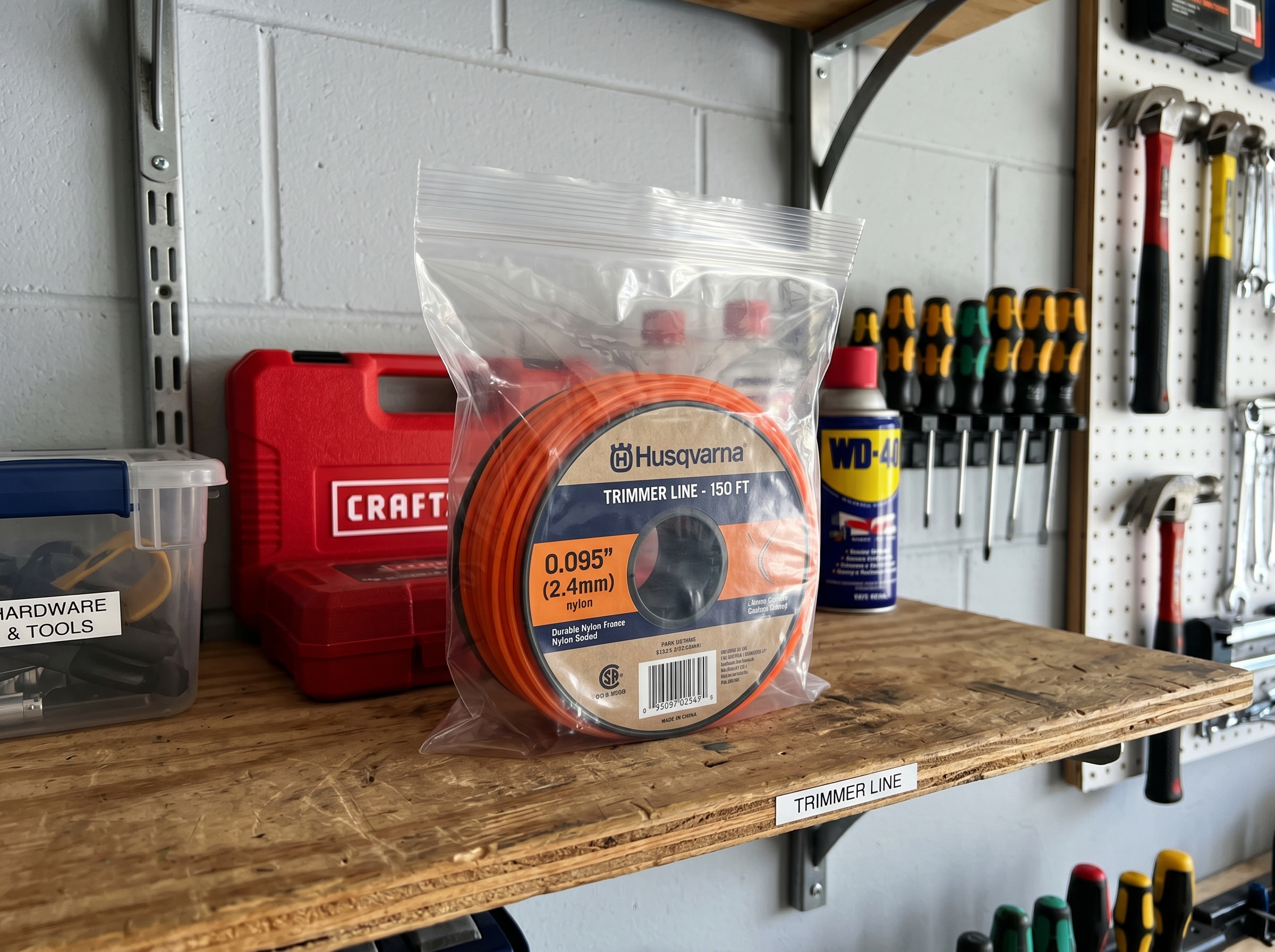
If the spool is mostly full: Remove the line from the spool, coil it loosely, and store it in a sealed plastic bag with a damp paper towel. This keeps moisture in the nylon and prevents the brittleness that cold, dry air causes. Store the bag indoors if possible — a basement shelf or closet works. The line will still be flexible and ready to wind when spring arrives.
If the spool is mostly spent: Strip the remaining line and discard it. Trying to stretch a partial load into next season usually means poor feeding and frequent jams from the start. Fresh line is cheap; wasted time re-clearing a jammed head is not.
Either way, store the empty spool in the clean trimmer head or in a bag to keep dust out. Inspect the spool body for cracks or warping — cold storage can worsen hairline fractures in plastic. If the spool looks marginal, order a replacement now while you’re thinking about it. Check Best Replacement Spools by Brand to find the right part.
Step 3: Store bulk line properly
If you buy trimmer line in bulk rolls or donut packs, winter storage matters just as much. The same moisture-loss and UV rules apply:
- Keep bulk line in a sealed container or bag. A five-gallon bucket with a lid works well for large rolls.
- Store it out of direct sunlight. UV degrades nylon whether it’s on a spool or on a shelf.
- Add a damp cloth or paper towel to the container if it will sit in an unheated space. You want some ambient moisture, not a soaking wet environment.
- Don’t hang line on an open pegboard in a garage with windows. This is the single most common storage mistake and the reason so much line goes bad over winter.
Different line profiles hold up differently in storage. Round line tends to tolerate drying slightly better than twisted or serrated profiles because it has less surface area per unit length. But all nylon line benefits from the same moisture-retention approach. For more on how line shape affects performance, see Twisted vs Round vs Serrated Trimmer Line.
Step 4: Battery storage
If you run a cordless trimmer, the battery needs attention too. Lithium-ion batteries do not like sitting at full charge or at zero for months.
- Store batteries at 40-60% charge. Most manufacturers recommend this range for long-term storage. A fully charged battery left for months can degrade faster, and a fully depleted one risks dropping below the voltage threshold where the charger won’t recognize it.
- Keep batteries indoors. Lithium-ion cells lose capacity faster in freezing temperatures. A shelf in the house or basement is much better than an unheated garage.
- Remove the battery from the trimmer. Leaving it installed can allow a slow parasitic drain, especially on tools with onboard electronics.
Check your battery terminals for corrosion or debris before storing. A quick wipe with a dry cloth keeps the contacts clean.
Step 5: Gas trimmer fuel
For gas-powered trimmers, fuel management is the biggest winter storage variable:
- Run the trimmer until the tank is empty, or drain the fuel completely. Old gas left in the tank and carburetor over winter turns to varnish and clogs jets.
- Alternatively, add fuel stabilizer to a full tank and run the engine for a minute to circulate it. This is the better option if you don’t want to fully drain the system.
- Replace the spark plug if it’s been a full season. A fresh plug in the fall means one less thing to troubleshoot in spring.
Step 6: Hang or store the trimmer properly
How you physically store the trimmer matters more than most people think:
- Hang it vertically on a wall hook or tool rack. This keeps the head off the floor, prevents the shaft from bowing, and saves floor space.
- Don’t stack heavy items on top of the trimmer head. Pressure on the head housing can crack the cap or deform the spool cavity.
- Cover the head with a bag or old cloth if the storage area is dusty.
Fall storage checklist
| Task | Why it matters |
|---|---|
| Remove and clean spool | Prevents packed debris from hardening over winter |
| Store line with moisture | Stops nylon from going brittle |
| Inspect eyelet and head | Catch wear before next season |
| Store battery at 40-60% indoors | Preserves cell health and capacity |
| Drain fuel or add stabilizer | Prevents carburetor varnish |
| Hang trimmer vertically | Protects shaft and head from damage |
Ten minutes in the fall saves a replacement spool, a roll of wasted line, and an hour of troubleshooting next spring. If you need parts before you put the trimmer away, browse spools and line in the shop.

Find the right part on Amazon
Check price, stock and fitment — ships direct from Amazon.
§ Parts


