Overview
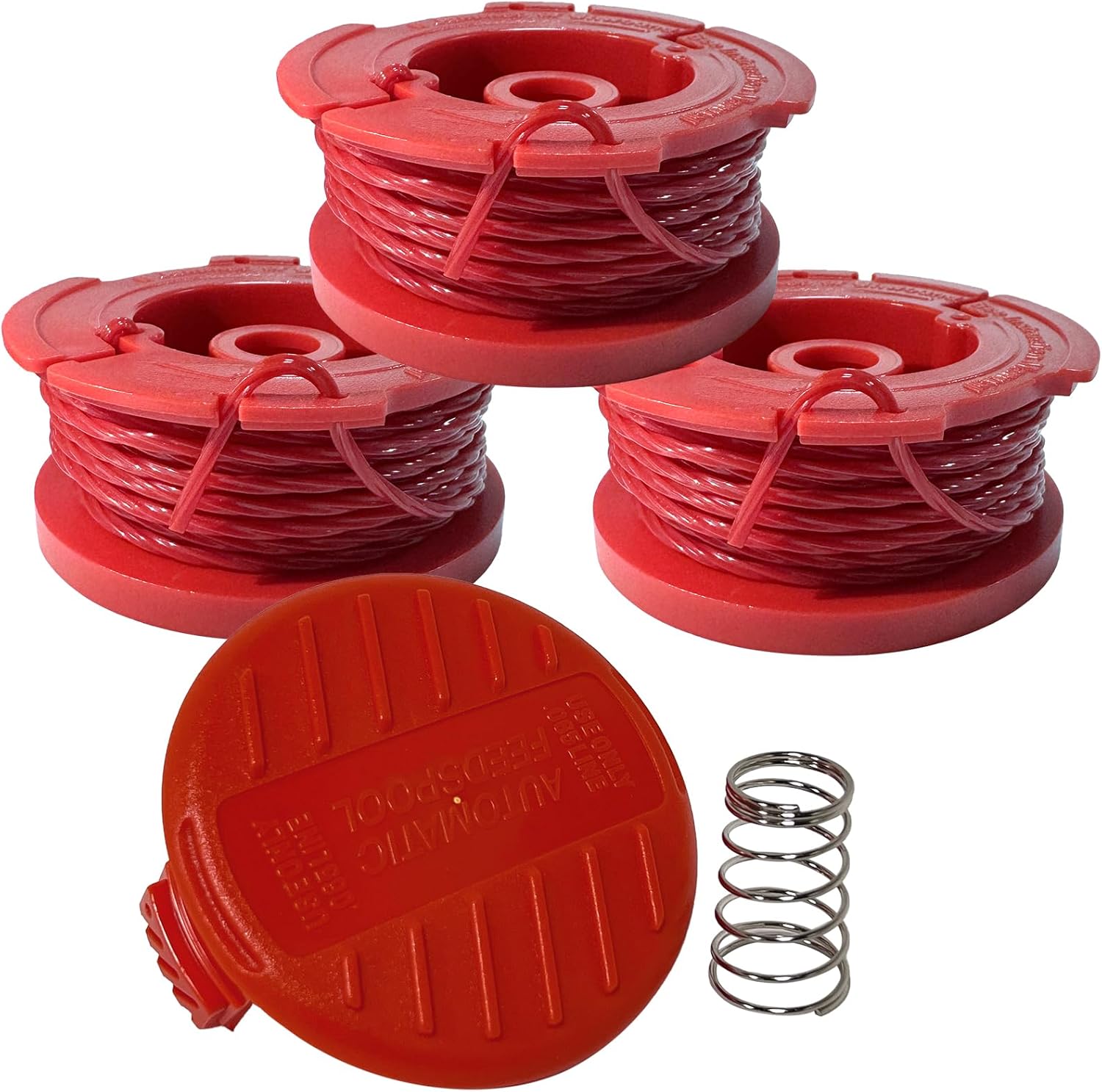
This pre-wound replacement spool drops directly into compatible string trimmers, eliminating the hassle of hand-winding line. Worn or empty spools leave trimmer owners without a cutting edge mid-job. Keeping spare aftermarket spools on hand ensures minimal downtime and consistent line feed during yard work.
Key specifications
- Pre-wound replacement trimmer spool
- Direct-fit for listed trimmer models
- Bump-feed compatible winding pattern
Compatibility
This spool is designed for Craftsman string trimmers as listed above. Confirm the spool part number, line diameter, and trimmer model before ordering to ensure a proper fit.
Installation notes
Power off the trimmer and press the tabs on the spool housing to release the cover. Pull out the empty spool and clear any debris from the housing interior. Drop in the new spool, route the line through the eyelets, and snap the cover back on.
Common questions
Q: Will this CMZST080 spool + cap fit my Craftsman CMCST930P1 Type 1 or only the CMCST915C1?
Yes, this spool and cap set is compatible with the Craftsman CMCST930P1 Type 1 as well as CMCST915C1, CMCST910M1, CMCST910B, CMCST910M, and CMCST910 models listed. If your trimmer matches one of those model numbers, this is the correct replacement style for the spool and retaining cap.
Q: Does the CMZST0803 spool come pre-wound, and how do I install the cap correctly on my CMCST910B?
The spool is designed as a ready replacement, so installation is usually just removing the old cap, lifting out the old spool, and dropping the new spool into the head with the line routed through the eyelets. When reinstalling the cap, make sure both tabs snap in evenly and the line moves freely before starting the trimmer.
Q: My CMCST915C1 keeps feeding line unevenly—will replacing both the spool and cap help, or should I only change the spool?
If the cap is worn, cracked, or not holding the spool tightly, replacing both parts together is a good idea because a loose cap can cause poor line feeding. On these Craftsman heads, uneven feed is often caused by spool wear, tangled line, or a cap that no longer locks securely.